Entendiendo el Fenómeno GLP-1
El péptido similar al glucagón tipo 1 (GLP-1) se ha convertido en una de las hormonas más comentadas en la medicina moderna, principalmente debido al auge de los agonistas sintéticos de GLP-1 utilizados para la pérdida de peso. Sin embargo, lo que mucha gente no se da cuenta es que tu intestino es perfectamente capaz de producir su propio GLP-1. Esta hormona es secretada naturalmente por las células L en tus intestinos en respuesta a la ingestión de nutrientes, indicando a tu cerebro que estás lleno e instruyendo a tu páncreas para que libere insulina.
La dieta occidental moderna, que es altamente procesada y despojada de fibra, no logra estimular adecuadamente estas células L. Como resultado, las señales naturales de saciedad se silencian, lo que lleva a comer en exceso y a disfunción metabólica. Al reintroducir estratégicamente alimentos integrales específicos, podemos reactivar esta vía de señalización evolutiva.
El Poder de las Fibras Viscosas y Fermentables
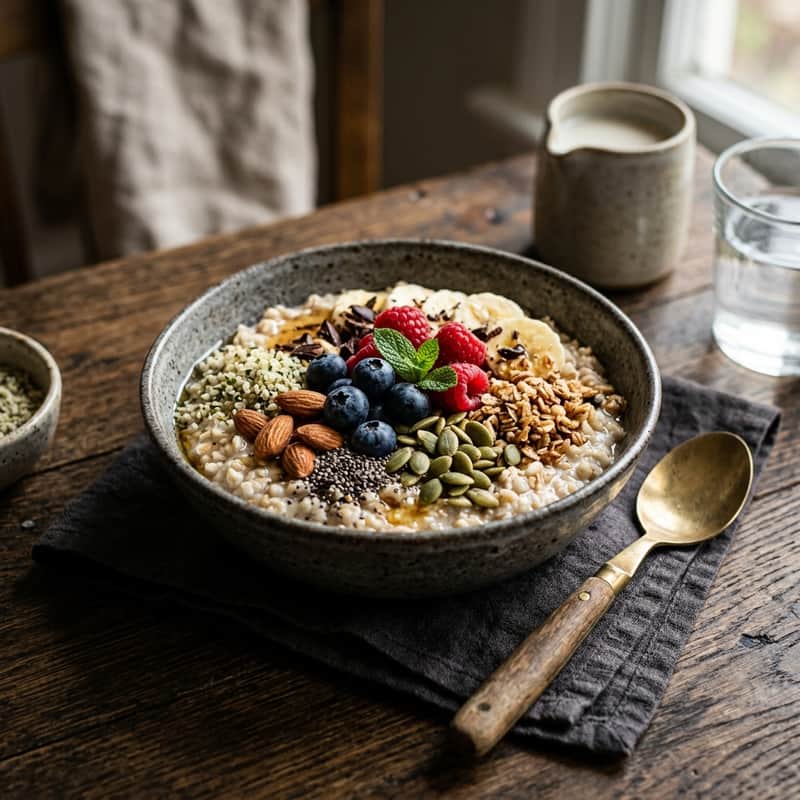
No todas las fibras estimulan el GLP-1 por igual. Los desencadenantes más potentes son las fibras viscosas y altamente fermentables. El beta-glucano, que se encuentra abundantemente en la avena y la cebada, forma una sustancia gelatinosa en el tracto digestivo. Esto ralentiza el vaciado gástrico, lo que imita naturalmente el mecanismo de los medicamentos sintéticos GLP-1, manteniéndote lleno por mucho más tiempo.
Además, cuando las fibras fermentables de alimentos como las semillas de chía, las semillas de lino y las legumbres llegan al colon, el microbioma intestinal las metaboliza en ácidos grasos de cadena corta (AGCC). Estos AGCC luego se unen a receptores específicos en las células L, desencadenando una segunda y prolongada ola de liberación natural de GLP-1 horas después de tu comida.
Un Enfoque Clínico Sostenible
Mientras que las drogas sintéticas proporcionan un pico masivo y continuo de GLP-1, un enfoque basado primero en los alimentos proporciona una liberación natural y pulsátil que se alinea con nuestra biología circadiana. Incorporar solo 30 gramos de fibra viscosa y diversa por día puede mejorar significativamente la sensibilidad a la insulina y el control del apetito sin esfuerzo.
La Mecánica Clínica de Metabolismo
Al examinar las implicaciones de la dieta natural glp-1: cómo los alimentos integrales aumentan tus hormonas de saciedad, la ciencia nutricional moderna revela a complex interplay between bioactive compounds and cellular metabolism. Historically, we have viewed food purely as caloric fuel. However, the paradigm is shifting toward understanding food as biological information. Every time you consume these nutrients, you are sending a stream of data to your cells, instructing them to upregulate protective pathways, modulate inflammation, and enhance mitochondrial efficiency.
One of the most fascinating aspects of this biological signaling is the concept of hormesis—a biological phenomenon where a beneficial effect results from exposure to low doses of an agent that is otherwise toxic or lethal when given at higher doses. Many phytochemicals act as mild cellular stressors, which in turn activate the body's endogenous antioxidant defense systems, such as the Nrf2 pathway. This is why a diverse intake of plant-based whole foods is so critical for longevity and systemic resilience.
Furthermore, the integrity of the gut microbiome plays an indispensable role. The microbiome acts as a secondary organ, processing complex polyphenols and fibers into highly bioavailable metabolites. These metabolites, such as short-chain fatty acids (SCFAs) like butyrate, enter the bloodstream and exert profound systemic effects, including crossing the blood-brain barrier to influence neuroinflammation and cognitive function. This bidirectional communication—often referred to as the gut-brain axis—underscores the importance of a nutrient-dense diet.
Aplicaciones Avanzadas y Emparejamientos Sinérgicos
To maximize the bioavailability and efficacy of these nutrients, strategic food pairing is essential. For instance, lipid-soluble compounds require the presence of dietary fats for optimal absorption. Pairing fat-soluble vitamins or carotenoids with sources of healthy fats—such as extra virgin olive oil, avocados, or nuts—can increase their absorption by several folds. Similarly, the activation of certain beneficial enzymes, like myrosinase in cruciferous vegetables, can be enhanced by specific preparation methods.
Incorporating these clinical insights into a daily routine does not require a complete overhaul of one's lifestyle. Instead, it involves making intentional, evidence-based choices. By prioritizing foods with high nutrient density and specific bioactive profiles, individuals can proactively support their cellular health. The compounding effects of these dietary choices over years and decades are what ultimately shape our healthspan and resilience against chronic, age-related conditions.
As we continue to explore the frontiers of nutritional genomics and metabolomics, our understanding of these mechanisms will only deepen. The transition from a generalized dietary approach to personalized, precision nutrition is on the horizon. Until then, the foundational principles remain clear: a diverse, whole-food diet rich in specific, clinically validated compounds is our most powerful tool for maintaining vitality and preventing disease.
En conclusión, el potencial terapéutico of these dietary interventions extends far beyond simple macronutrient balancing. By viewing our diet through the lens of cellular signaling and microbiome optimization, we empower ourselves to take control of our health trajectory. The evidence is clear: the right foods are not just sustenance; they are medicine.
Medical Disclaimer
The content provided on MyWholeFoods is for educational and informational purposes only and does not constitute medical advice. While our articles are peer-reviewed and cited from clinical literature, this information should not be used to diagnose, treat, or prevent any disease. Always consult with a qualified healthcare professional before making significant changes to your diet or wellness routine.