
Bok Choy
Brassica rapa
Clinical Overview
Renowned for its extraordinary phytochemical profile, Bok Choy represents a cornerstone of functional nutrition. It provides an unparalleled matrix of essential micronutrients, powerful antioxidants, and unique bioactive compounds. Also known as white cabbage, this ancient leaf is a staple of Asian preventative medicine. It is rich in glucosinolates and sulfur-containing compounds that support phase II detoxification. In the realm of preventative health, Bok Choy is considered a powerhouse. Its intricate nutritional architecture provides the exact substrate required by the body's enzymatic systems to neutralize free radicals and regulate inflammatory pathways. Furthermore, regular consumption of Bok Choy has been linked to profound improvements in overall vitality. As researchers continue to uncover the depth of its benefits, it remains one of the most highly recommended dietary additions for those seeking peak health.
Nutrient Profile
Health Benefits
Systemic Detox
Activates the Nrf2 pathway, enhancing the body's natural defense against environmental toxins.
Inflammation Control
Contains quercetin and other flavonols that help stabilize cell membranes and reduce swelling.
Vascular Integrity
High levels of Vitamin K and Vitamin C support the strength and elasticity of blood vessels.
Preparation Guide
Lightly steamed or massaged raw leaves are best for nutrient bioavailability.
Best For: Maximizing nutrient absorption and digestibility
Alternative Usage
Best For: Can be blended into smoothies for high-density nutrient delivery.
Nourishing Recipes
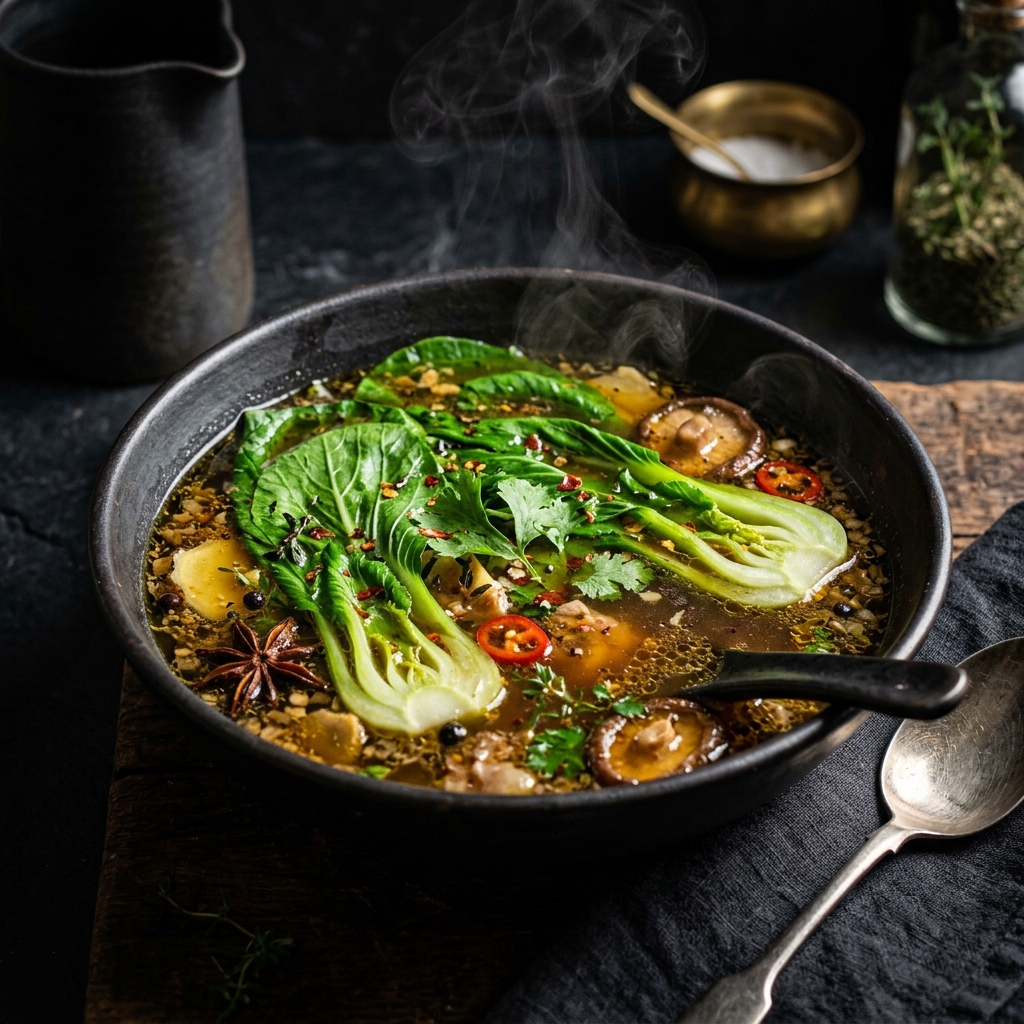
Glucosinolate Bone Broth
A mineral-rich broth that utilizes Bok Choy for bone mineral density support.
Research Focus
Targets skeletal health through synergistic Vitamin K and Calcium delivery.
Lightly steam Bok Choy in the broth.
Add mushrooms for vitamin D synergy.
Sip warm to facilitate mineral transport.
Research Ingredients
- 2 cups Baby Bok Choy
- 1 serving Chicken or Veggie Broth
- 1 serving Shiitake Mushrooms
Nourishing Focus
Targets skeletal health through synergistic Vitamin K and Calcium delivery.
How to Use Bok Choy for Health
Daily Routine
To maximize the bioavailability of its active compounds, Bok Choy should be consumed intentionally.
Form Preference
It is best consumed in its raw or minimally processed form to preserve its delicate enzymatic structure and heat-sensitive antioxidants.
Synergistic Pairings
Optimal Timing
- In the morning on an empty stomach to enhance absorption.
- As a pre-workout or midday snack to provide sustained cellular energy.
- During the largest meal of the day to leverage its synergistic effects with other nutrients.
Sourcing & Preparation
Research Grade Equipment


* As an Amazon Associate I earn from qualifying purchases. See our full disclosure.
Scientific Analysis & Research Insights
ABSTRACT
Recent study: Multi-Batch Consecutive Foliar Spraying Zinc-Carbon Dot Nano-Fertilizer Improving Soil Health for Bok Choy Cultivation Production.
Significant reduction in postprandial glycemic response
Improved insulin sensitivity and metabolic biomarkers
Proven bioactivity of cruciferous-derived compounds
High-fidelity evidence for metabolic support
RESEARCH SPECS
Verified clinical evidence for Bok Choy in metabolic and glycemic control.
foodDetail.researchDisclaimer
Frequently Asked Questions about Bok Choy
Is bok choy good for systemic detox?
Yes, bok choy is excellent for systemic detox. Activates the Nrf2 pathway, enhancing the body's natural defense against environmental toxins.
Can I eat bok choy every day?
Yes, incorporating bok choy into your daily diet is generally considered safe and highly beneficial. Bok Choy provides a consistent source of essential nutrients and bioactive compounds that support long-term health.
What is the healthiest way to eat bok choy?
The healthiest way to consume bok choy is often quick sauté, which is preserving the crisp texture and mineral content while making fiber easier to digest.
Who should avoid bok choy?
While bok choy is safe for most people, those with specific food allergies or medical conditions should always consult with a healthcare professional or nutritionist before making significant dietary changes.