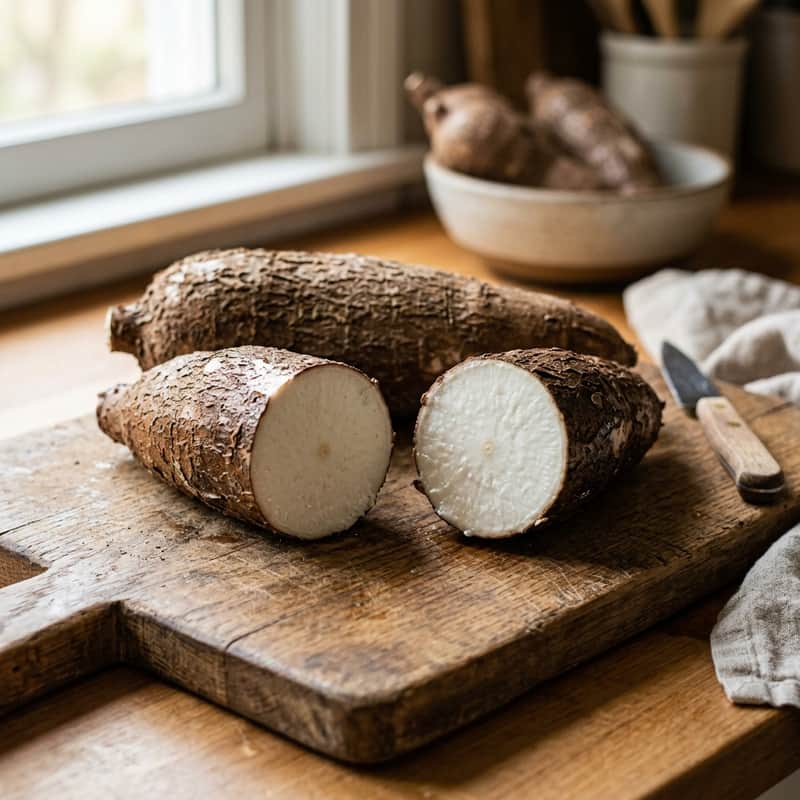
Cassava (Yuca)
Manihot esculenta
Clinical Overview
Cassava (Yuca) is widely recognized in nutritional science for its profound impact on human health. Historically utilized in traditional practices across the globe, it has recently gained significant attention from modern clinical researchers. A starchy, highly resilient root tuber native to South America. In functional medicine, particularly within the Autoimmune Protocol (AIP), cassava is highly prized not just as a grain-free flour alternative, but as a premier source of Resistant Starch Type 3 (RS3). When cooked and subsequently cooled, the starches retrofit into a crystalline structure that humans cannot digest, but which serves as ultimate fuel for beneficial colon bacteria. The clinical significance of Cassava (Yuca) cannot be overstated. By providing the body with a dense concentration of bioavailable nutrients, it actively supports metabolic homeostasis, enhances immune resilience, and fosters long-term longevity. Ultimately, Cassava (Yuca) exemplifies the philosophy that food is medicine. By prioritizing such nutrient-dense whole foods, individuals can proactively engineer their health and build robust resilience against modern dietary pitfalls.
Nutrient Profile
Health Benefits
Gut Microbiome Restoration
The resistant starch in cooled cassava ferments in the large intestine, feeding beneficial bifidobacteria and leading to the massive production of butyrate, a short-chain fatty acid that repairs the gut lining.
Autoimmune & Inflammatory Relief
As a 100% grain-free, gluten-free, and nut-free carbohydrate source, it provides energy without triggering the inflammatory immune responses associated with leaky gut or autoimmune conditions.
Insulin Sensitivity
The retrograded resistant starch physically resists digestive enzymes, drastically lowering the glycemic impact of the meal and improving systemic insulin sensitivity over time.
Preparation Guide
Must be peeled and thoroughly cooked (boiled until tender).
Best For: Neutralizing naturally occurring toxins and making the starch accessible.
Alternative Usage
Best For: Using certified cassava flour for grain-free baking.
Nourishing Recipes
Gut-Healing AIP Cassava Flatbread
A simple, highly digestible flatbread that acts as the perfect vehicle for anti-inflammatory fats, entirely free of grains, gluten, nuts, and dairy.
Research Focus
Autoimmune protocol compliance, gut barrier repair, and resistant starch delivery.
In a mixing bowl, combine the cassava flour, sea salt, and herbs.
Add the olive oil and warm water. Knead the mixture until a smooth, pliable dough forms. If it's too dry, add water a teaspoon at a time.
Divide the dough into 4 balls and roll each one out between two sheets of parchment paper until very thin.
Cook on a dry, preheated cast-iron skillet over medium-high heat for about 2-3 minutes per side, until slightly blistered.
Crucial Step: Let the flatbreads cool completely to room temperature before eating to maximize the formation of retrograded Resistant Starch (RS3).

Research Ingredients
- 1 cup high-quality Cassava Flour
- 1/4 cup extra virgin olive oil or melted coconut oil
- 1/2 cup warm water
- 1/2 tsp sea salt
- 1 tsp dried oregano or rosemary (optional)
Nourishing Focus
Autoimmune protocol compliance, gut barrier repair, and resistant starch delivery.
How to Use Cassava (Yuca) for Health
Daily Routine
To maximize the bioavailability of its active compounds, Cassava (Yuca) should be consumed intentionally.
Form Preference
It is best consumed in its raw or minimally processed form to preserve its delicate enzymatic structure and heat-sensitive antioxidants.
Synergistic Pairings
Optimal Timing
- In the morning on an empty stomach to enhance absorption.
- As a pre-workout or midday snack to provide sustained cellular energy.
- During the largest meal of the day to leverage its synergistic effects with other nutrients.
Sourcing & Preparation
Research Grade Equipment


* As an Amazon Associate I earn from qualifying purchases. See our full disclosure.
Scientific Analysis & Research Insights
ABSTRACT
Clinical trials examining retrograded resistant starches from roots like cassava demonstrate profound shifts in the human microbiome. Increased consumption is directly correlated with higher fecal butyrate concentrations, reduced inflammatory biomarkers, and improved colonic mucosal integrity.
Significant increase in endogenous butyrate production
Strengthening of intestinal tight junctions (treating 'leaky gut')
Lowered postprandial glycemic and insulinemic responses
Reduction of systemic pro-inflammatory cytokines
RESEARCH SPECS
Positions cooked-and-cooled cassava as a first-line therapeutic food for inflammatory bowel diseases and metabolic syndrome.
foodDetail.researchDisclaimer
Frequently Asked Questions about Cassava (Yuca)
What makes Cassava (Yuca) uniquely beneficial compared to other foods in its category?
Cassava (Yuca) contains a specific matrix of phytonutrients and antioxidants that are highly bioavailable. Unlike isolated supplements, the whole-food structure of Cassava (Yuca) ensures that its active compounds are absorbed efficiently and utilized optimally by the body's metabolic pathways.
Can I consume Cassava (Yuca) every day?
Yes, daily consumption is generally considered safe and highly beneficial for most individuals. Consistency is key when leveraging whole foods for clinical outcomes, as the body relies on a steady influx of these micronutrients to maintain cellular health and homeostasis.
How does Cassava (Yuca) interact with the gut microbiome?
The complex fibers and specific polyphenols found in Cassava (Yuca) act as powerful prebiotics. They selectively nourish beneficial gut flora, enhancing the production of short-chain fatty acids (SCFAs) which are crucial for maintaining the integrity of the gut lining and modulating systemic inflammation.