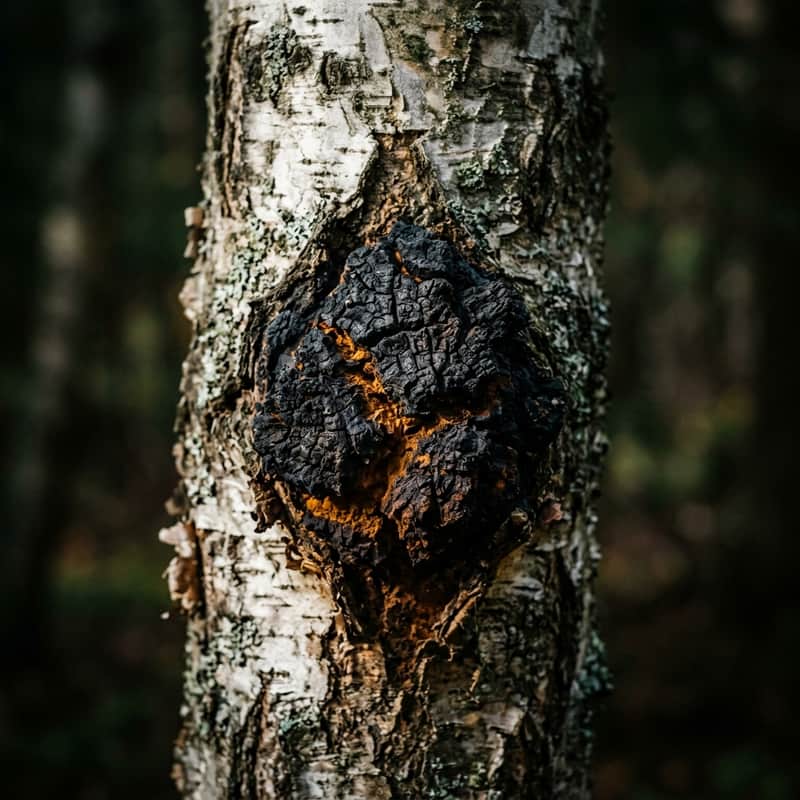
Chaga
Inonotus obliquus
Clinical Overview
Among the most potent foods in its category, Chaga stands out for its unique molecular composition and impressive clinical efficacy. It has been cultivated for centuries and revered for its remarkable ability to support systemic wellness. A parasitic fungus that grows primarily on birch trees in cold climates. It resembles burnt charcoal but is a powerhouse of antioxidants, melanin, and betulinic acid. When integrated into a daily dietary regimen, this remarkable whole food acts as a natural modulator of physiological processes. Its unique blend of fibers, vitamins, and rare secondary metabolites work synergistically to optimize cellular function and defend against oxidative stress. Beyond its primary benefits, Chaga serves as a catalyst for holistic wellbeing. Its integration into modern diets bridges the gap between ancient dietary wisdom and contemporary clinical science, offering a pure, whole-food approach to longevity.
Nutrient Profile
Health Benefits
Oxidative Stress
Contains one of the highest ORAC (Oxygen Radical Absorbance Capacity) scores of any food, neutralizing free radicals and protecting cellular DNA.
Skin and UV Damage
High melanin content supports skin health and provides natural protection against UV radiation.
Preparation Guide
Must be extracted (heat or alcohol); raw Chaga powder is largely indigestible.
Best For: Maximizing nutrient absorption and digestibility
Alternative Usage
Best For: General health maintenance
How to Use Chaga for Health
Daily Routine
To maximize the bioavailability of its active compounds, Chaga should be consumed intentionally.
Form Preference
It is best consumed in its raw or minimally processed form to preserve its delicate enzymatic structure and heat-sensitive antioxidants.
Synergistic Pairings
Optimal Timing
- In the morning on an empty stomach to enhance absorption.
- As a pre-workout or midday snack to provide sustained cellular energy.
- During the largest meal of the day to leverage its synergistic effects with other nutrients.
Sourcing & Preparation
Research Grade Equipment


* As an Amazon Associate I earn from qualifying purchases. See our full disclosure.
Scientific Analysis & Research Insights
ABSTRACT
Chaga extracts demonstrate potent antioxidant activity, capable of protecting cells against oxidative DNA damage and suppressing inflammatory cytokines.
Significant scavenging of superoxide radicals.
Protection of lymphocytes against hydrogen peroxide-induced DNA damage.
RESEARCH SPECS
Moderate
foodDetail.researchDisclaimer
Frequently Asked Questions about Chaga
What makes Chaga uniquely beneficial compared to other foods in its category?
Chaga contains a specific matrix of phytonutrients and antioxidants that are highly bioavailable. Unlike isolated supplements, the whole-food structure of Chaga ensures that its active compounds are absorbed efficiently and utilized optimally by the body's metabolic pathways.
Can I consume Chaga every day?
Yes, daily consumption is generally considered safe and highly beneficial for most individuals. Consistency is key when leveraging whole foods for clinical outcomes, as the body relies on a steady influx of these micronutrients to maintain cellular health and homeostasis.
How does Chaga interact with the gut microbiome?
The complex fibers and specific polyphenols found in Chaga act as powerful prebiotics. They selectively nourish beneficial gut flora, enhancing the production of short-chain fatty acids (SCFAs) which are crucial for maintaining the integrity of the gut lining and modulating systemic inflammation.