
Collard Greens
Brassica oleracea var. viridis
Clinical Overview
Collard greens are a staple in Southern cuisine and a true nutritional powerhouse. Belonging to the cruciferous vegetable family (along with broccoli, cabbage, and kale), they are exceptionally rich in vitamins K, A, and C, as well as folate and calcium. In clinical nutrition, collard greens are celebrated for their unparalleled ability to bind bile acids in the digestive tract—especially when lightly steamed—which dramatically aids in lowering cholesterol levels and reducing overall cardiovascular disease risk. Beyond heart health, they provide potent glucosinolates that support cellular detoxification and may play a role in cancer prevention. Regular consumption of collard greens supports bone density through highly bioavailable calcium and Vitamin K, while also acting as a profound anti-inflammatory agent. For those looking to optimize their metabolic health and reduce oxidative stress, incorporating this resilient, dark leafy green into a weekly dietary rotation offers immense, clinically backed benefits. Their high fiber content ensures a stable blood sugar response, feeding the beneficial bacteria in the gut microbiome. Additionally, collards contain alpha-lipoic acid, an antioxidant that has been shown to lower glucose levels, increase insulin sensitivity, and prevent oxidative stress-induced changes in patients with diabetes. This makes them not just a side dish, but a foundational food for long-term metabolic and cardiovascular longevity.
Nutrient Profile
Health Benefits
Cardiovascular Health
Uniquely effective at binding bile acids, forcing the body to draw on existing cholesterol to produce more, thereby lowering blood cholesterol levels.
Bone Density
Provides massive amounts of Vitamin K and highly bioavailable calcium, critical for osteocalcin regulation and bone matrix formation.
Cellular Detoxification
Contains glucosinolates that activate detoxifying enzymes in the liver, helping eliminate environmental toxins and reducing cancer risk.
Preparation Guide
Steaming
Best For: Steaming is clinically proven to maximize the bile-acid binding capacity of collard greens compared to eating them raw or boiling.
Nourishing Recipes
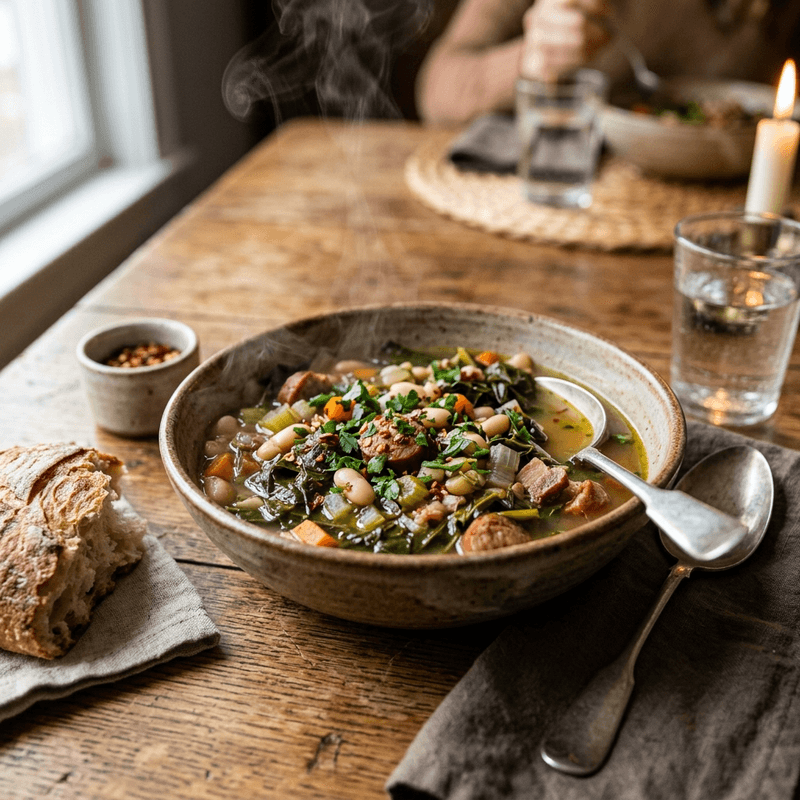
Healing Steamed Collards with White Beans
A heart-healthy, high-fiber stew designed to maximize cholesterol reduction.
Research Focus
Focuses on steaming to enhance bile acid binding, combined with soluble fiber from beans for maximum cardiovascular benefit.
Lightly steam the chopped collard greens for 5-7 minutes until tender but still bright green.
In a separate pan, sauté the garlic in olive oil until fragrant.
Add the steamed collards, white beans, smoked paprika, and broth to the pan.
Simmer for 5 minutes to combine flavors. Serve warm.
Research Ingredients
- 1 large bunch of collard greens, stems removed and chopped
- 1 cup cooked white beans (cannellini or navy)
- 2 cloves garlic, minced
- 1 tbsp extra virgin olive oil
- 1 tsp smoked paprika
- 1/2 cup vegetable broth
Nourishing Focus
Focuses on steaming to enhance bile acid binding, combined with soluble fiber from beans for maximum cardiovascular benefit.
How to Use Collard Greens for Health
Daily Routine
1 cup cooked, 3-4 times per week.
Form Preference
Steamed or lightly sautéed.
Synergistic Pairings
Optimal Timing
- Side dishes
- Stews
- Wraps
Sourcing & Preparation
Research Grade Equipment


* As an Amazon Associate I earn from qualifying purchases. See our full disclosure.
Scientific Analysis & Research Insights
ABSTRACT
Clinical research underscores the cholesterol-lowering efficacy of steamed collard greens through superior bile acid binding, outperforming even pharmaceutical interventions like cholestyramine in some in vitro assays.
Steamed collard greens exhibit significantly higher bile acid binding than raw.
Supports robust cholesterol reduction and cardiovascular risk mitigation.
RESEARCH SPECS
A first-line dietary intervention for hypercholesterolemia.
foodDetail.researchDisclaimer
Frequently Asked Questions about Collard Greens
Why shouldn't I eat them raw?
While raw collards are nutritious, steaming them fundamentally alters their fiber structure, drastically increasing their ability to bind bile acids and lower cholesterol. It also reduces goitrogens that can interfere with thyroid function.
How do collard greens compare to kale?
Collard greens and kale are close botanical relatives. However, collard greens have been shown in some studies to have a slightly higher bile acid binding capacity (meaning they are better at lowering cholesterol). They also have a milder, more earthy flavor compared to kale's bitterness.
Do I need to eat them with fat to absorb the nutrients?
Yes. Collard greens are extremely rich in fat-soluble vitamins, particularly Vitamins A and K. Cooking them with a healthy fat like extra virgin olive oil or serving them alongside seeds ensures your body can fully absorb these critical nutrients.
How do collard greens support bone health?
They are packed with Vitamin K, which improves calcium absorption and reduces urinary excretion of calcium. They also provide a significant amount of highly bioavailable plant-based calcium, making them an excellent choice for maintaining bone density.
Can collard greens help with digestion?
Absolutely. The high fiber and water content in collard greens help prevent constipation, promote regularity, and maintain a healthy digestive tract by feeding beneficial gut flora.