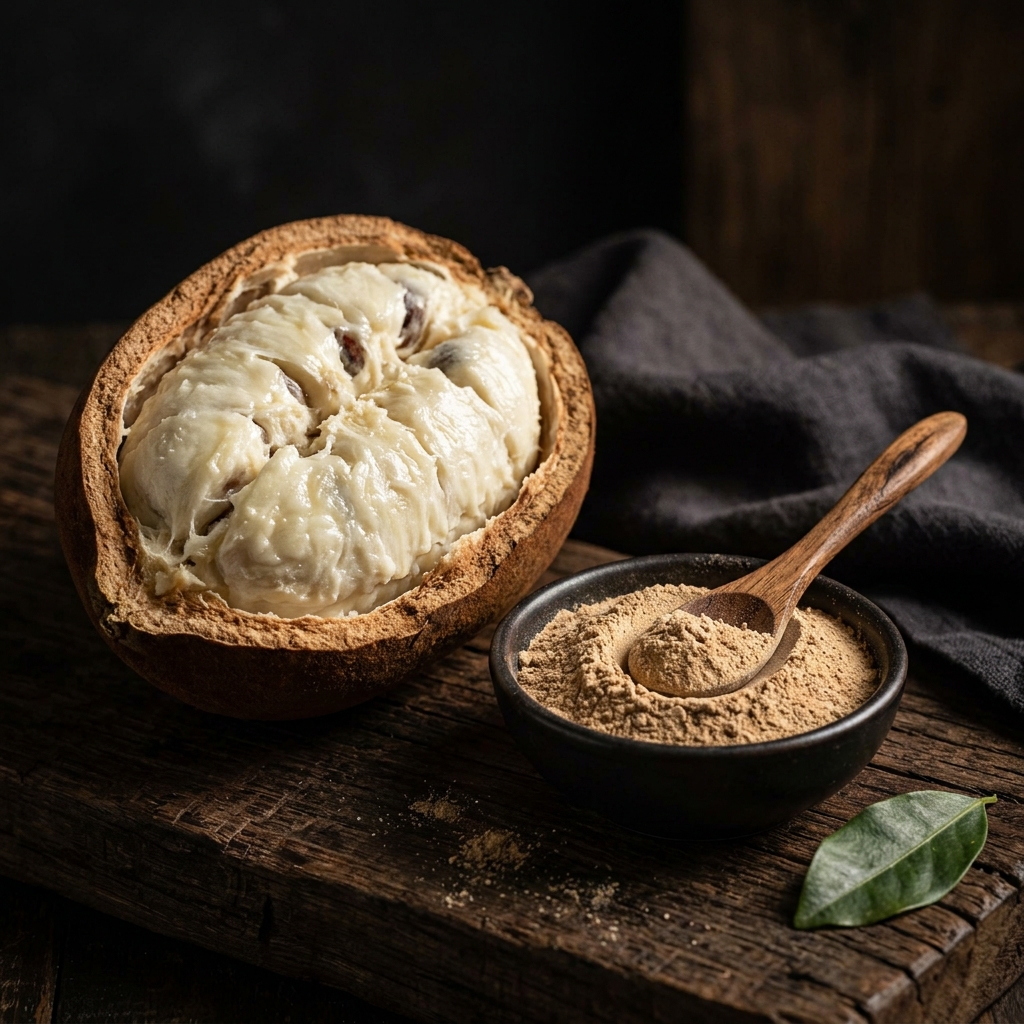
Cupuaçu
Theobroma grandiflorum
Clinical Overview
Among the most potent foods in its category, Cupuaçu stands out for its unique molecular composition and impressive clinical efficacy. It has been cultivated for centuries and revered for its remarkable ability to support systemic wellness. A tropical rainforest tree related to cacao, native to the Amazon basin. Cupuaçu (pronounced koo-poo-ah-soo) is revered as the 'pharmacy in a fruit' by indigenous peoples. Its creamy, white pulp boasts an incredibly unique matrix of phytonutrients, including theobromine, nine potent antioxidants (like theograndins), and essential fatty acids, making it a profound clinical food for cellular hydration, mood stabilization, and cardiovascular defense. When integrated into a daily dietary regimen, this remarkable whole food acts as a natural modulator of physiological processes. Its unique blend of fibers, vitamins, and rare secondary metabolites work synergistically to optimize cellular function and defend against oxidative stress. Beyond its primary benefits, Cupuaçu serves as a catalyst for holistic wellbeing. Its integration into modern diets bridges the gap between ancient dietary wisdom and contemporary clinical science, offering a pure, whole-food approach to longevity.
Nutrient Profile
Health Benefits
Cognitive & Mood Support
Unlike cacao, Cupuaçu contains zero caffeine but is rich in theobromine, a gentle stimulant that increases blood flow to the brain, enhancing mood and focus without the jittery cortisol spike.
Cellular Defense & Anti-Aging
Contains unique polyphenols called theograndins that exhibit massive antioxidant capacity, neutralizing free radicals and protecting cellular DNA from oxidative degradation.
Cardiovascular Health
The dense profile of healthy fatty acids and fiber significantly lowers LDL cholesterol oxidation and supports endothelial function, regulating blood pressure.
Preparation Guide
Raw Pulp or Powder
Best For: Maximum preservation of heat-sensitive theograndins and Vitamin C.
Nourishing Recipes
Amazonian Neuro-Boost Cupuaçu Smoothie
A creamy, highly bioavailable functional smoothie designed to deliver steady theobromine energy while flooding the system with unique antioxidants.
Research Focus
Sustained mood elevation, cognitive support, and cellular hydration.
Place the Cupuaçu powder or pulp into a high-speed blender.
Add the coconut milk, frozen banana, and chia seeds.
Blend on high until completely smooth and creamy.
Sweeten to taste and consume immediately to maximize antioxidant uptake.
Research Ingredients
- 2 tbsp pure Cupuaçu powder (or 1/2 cup frozen pulp)
- 1 cup coconut milk
- 1/2 frozen banana
- 1 tbsp chia seeds
- 1 tsp raw honey or monk fruit
Nourishing Focus
Sustained mood elevation, cognitive support, and cellular hydration.
How to Use Cupuaçu for Health
Daily Routine
1 to 2 tablespoons of powder daily.
Form Preference
Best when blended into cold or room-temperature liquids.
Synergistic Pairings
Optimal Timing
- Smoothies
- Desserts
- Energy Bars
Sourcing & Preparation
Research Grade Equipment


* As an Amazon Associate I earn from qualifying purchases. See our full disclosure.
Scientific Analysis & Research Insights
ABSTRACT
Clinical and phytochemical evaluations of Theobroma grandiflorum highlight its novel antioxidant compounds, specifically theograndins I and II, which demonstrate potent free-radical scavenging abilities and cytotoxicity against specific cancer cell lines in vitro.
Isolation of novel theograndin antioxidants
High capacity for quenching oxidative stress
Significant protective effects on colon health
RESEARCH SPECS
Establishes Cupuaçu as a premier functional food for combating systemic oxidative stress.
foodDetail.researchDisclaimer
Frequently Asked Questions about Cupuaçu
What makes Cupuaçu uniquely beneficial compared to other foods in its category?
Cupuaçu contains a specific matrix of phytonutrients and antioxidants that are highly bioavailable. Unlike isolated supplements, the whole-food structure of Cupuaçu ensures that its active compounds are absorbed efficiently and utilized optimally by the body's metabolic pathways.
Can I consume Cupuaçu every day?
Yes, daily consumption is generally considered safe and highly beneficial for most individuals. Consistency is key when leveraging whole foods for clinical outcomes, as the body relies on a steady influx of these micronutrients to maintain cellular health and homeostasis.
How does Cupuaçu interact with the gut microbiome?
The complex fibers and specific polyphenols found in Cupuaçu act as powerful prebiotics. They selectively nourish beneficial gut flora, enhancing the production of short-chain fatty acids (SCFAs) which are crucial for maintaining the integrity of the gut lining and modulating systemic inflammation.