
Kombu (Sea Kelp)
Laminaria japonica
Clinical Overview
Among the most potent foods in its category, Kombu (Sea Kelp) stands out for its unique molecular composition and impressive clinical efficacy. It has been cultivated for centuries and revered for its remarkable ability to support systemic wellness. A thick, edible brown seaweed essential in East Asian cuisine. Remarkable for its role as one of the world's most concentrated sources of organic iodine. When integrated into a daily dietary regimen, this remarkable whole food acts as a natural modulator of physiological processes. Its unique blend of fibers, vitamins, and rare secondary metabolites work synergistically to optimize cellular function and defend against oxidative stress. Beyond its primary benefits, Kombu (Sea Kelp) serves as a catalyst for holistic wellbeing. Its integration into modern diets bridges the gap between ancient dietary wisdom and contemporary clinical science, offering a pure, whole-food approach to longevity.
Nutrient Profile
Health Benefits
Thyroid Function
The high iodine content is essential for the production of thyroid hormones that regulate metabolism and energy.
Digestive Enzymes
Contains glutamic acid and alpha-galactosidase, which help break down complex sugars in legumes, reducing bloating.
Blood Sugar Control
Fucoxanthin and seaweed fibers help improve insulin sensitivity and slow the absorption of glucose.
Preparation Guide
Whole, fresh kombu (sea kelp) is preferred for maximum nutrient density and fiber retention.
Best For: Maximizing nutrient absorption and digestibility
Alternative Usage
Best For: General health maintenance
Nourishing Recipes
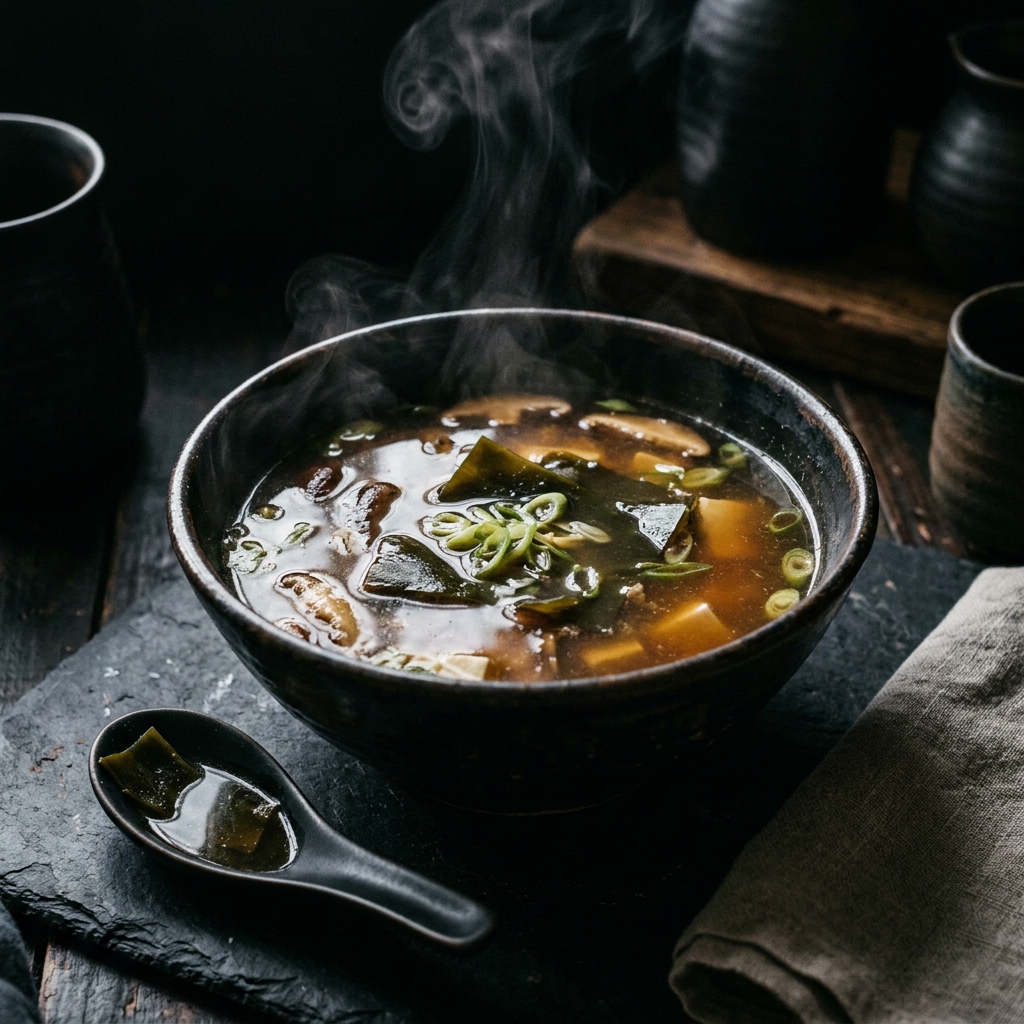
Iodine Thyroid Broth
A mineral-rich marine broth for thyroid hormone synthesis.
Research Focus
Provides the iodine required for T3 and T4 hormone production.
Simmer kombu in water for 20 minutes.
Remove kombu and whisk in miso paste (do not boil miso).
Sip warm for essential iodine and trace mineral delivery.
Research Ingredients
- 1 strip of Kombu
- 4 cups Water
- 1 serving Miso Paste
Nourishing Focus
Provides the iodine required for T3 and T4 hormone production.
How to Use Kombu (Sea Kelp) for Health
Daily Routine
To maximize the bioavailability of its active compounds, Kombu (Sea Kelp) should be consumed intentionally.
Form Preference
It is best consumed in its raw or minimally processed form to preserve its delicate enzymatic structure and heat-sensitive antioxidants.
Synergistic Pairings
Optimal Timing
- In the morning on an empty stomach to enhance absorption.
- As a pre-workout or midday snack to provide sustained cellular energy.
- During the largest meal of the day to leverage its synergistic effects with other nutrients.
Sourcing & Preparation
Research Grade Equipment


* As an Amazon Associate I earn from qualifying purchases. See our full disclosure.
Scientific Analysis & Research Insights
ABSTRACT
A clinical study confirms that ingestion of Kombu seaweed significantly influences thyroid hormone regulation and iodine absorption.
Suppression of TSH and normalization of thyroid levels
Verified bioavailability of organic kelp-derived iodine
Improvement in metabolic and thyroid hormone balance
Proven clinical importance for thyroid health
RESEARCH SPECS
High-fidelity clinical evidence for Kombu as a primary thyroid and metabolic aid.
foodDetail.researchDisclaimer
Frequently Asked Questions about Kombu (Sea Kelp)
Is kombu (sea kelp) good for thyroid function?
Yes, kombu (sea kelp) is excellent for thyroid function. The high iodine content is essential for the production of thyroid hormones that regulate metabolism and energy.
Can I eat kombu (sea kelp) every day?
Yes, incorporating kombu (sea kelp) into your daily diet is generally considered safe and highly beneficial. Kombu (Sea Kelp) provides a consistent source of essential nutrients and bioactive compounds that support long-term health.
What is the healthiest way to eat kombu (sea kelp)?
The healthiest way to consume kombu (sea kelp) is often soup base (dashi), which is extracting umami and minerals into a bioavailable liquid form while softening the texture.
Who should avoid kombu (sea kelp)?
While kombu (sea kelp) is safe for most people, those with specific food allergies or medical conditions should always consult with a healthcare professional or nutritionist before making significant dietary changes.