
Peppermint
Mentha x piperita
Clinical Overview
Peppermint is widely recognized in nutritional science for its profound impact on human health. Historically utilized in traditional practices across the globe, it has recently gained significant attention from modern clinical researchers. A fragrant, hybrid herb native to Europe and the Middle East, formed by a cross between watermint and spearmint. Peppermint is a metabolic, vascular, and gastrointestinal powerhouse rich in menthol, active monoterpenes, and antioxidants clinically proven to improve cardiometabolic outcomes, lower systolic blood pressure, improve vascular endothelial function, and relax intestinal smooth muscle. The clinical significance of Peppermint cannot be overstated. By providing the body with a dense concentration of bioavailable nutrients, it actively supports metabolic homeostasis, enhances immune resilience, and fosters long-term longevity. Ultimately, Peppermint exemplifies the philosophy that food is medicine. By prioritizing such nutrient-dense whole foods, individuals can proactively engineer their health and build robust resilience against modern dietary pitfalls.
Nutrient Profile
Health Benefits
Cardiometabolic & Vascular Dilation
Menthol and active monoterpenes stimulate nitric oxide pathways in the blood vessels, supporting endothelial function and promoting healthy blood pressure.
Antioxidant & Lipid Support
Upregulates antioxidant defense systems and helps optimize circulating lipid profiles by reducing lipid peroxidation.
Gastrointestinal Spasm Relief
Directly blocks calcium channels in intestinal smooth muscle, alleviating spasms, cramps, and bloating associated with IBS.
Preparation Guide
Infusions covered during steeping, or enteric-coated capsules for lower bowel delivery.
Best For: Maximizing nutrient absorption and digestibility
Alternative Usage
Best For: Spearmint or Caraway seeds for digestive comfort and spasm relief.
Nourishing Recipes
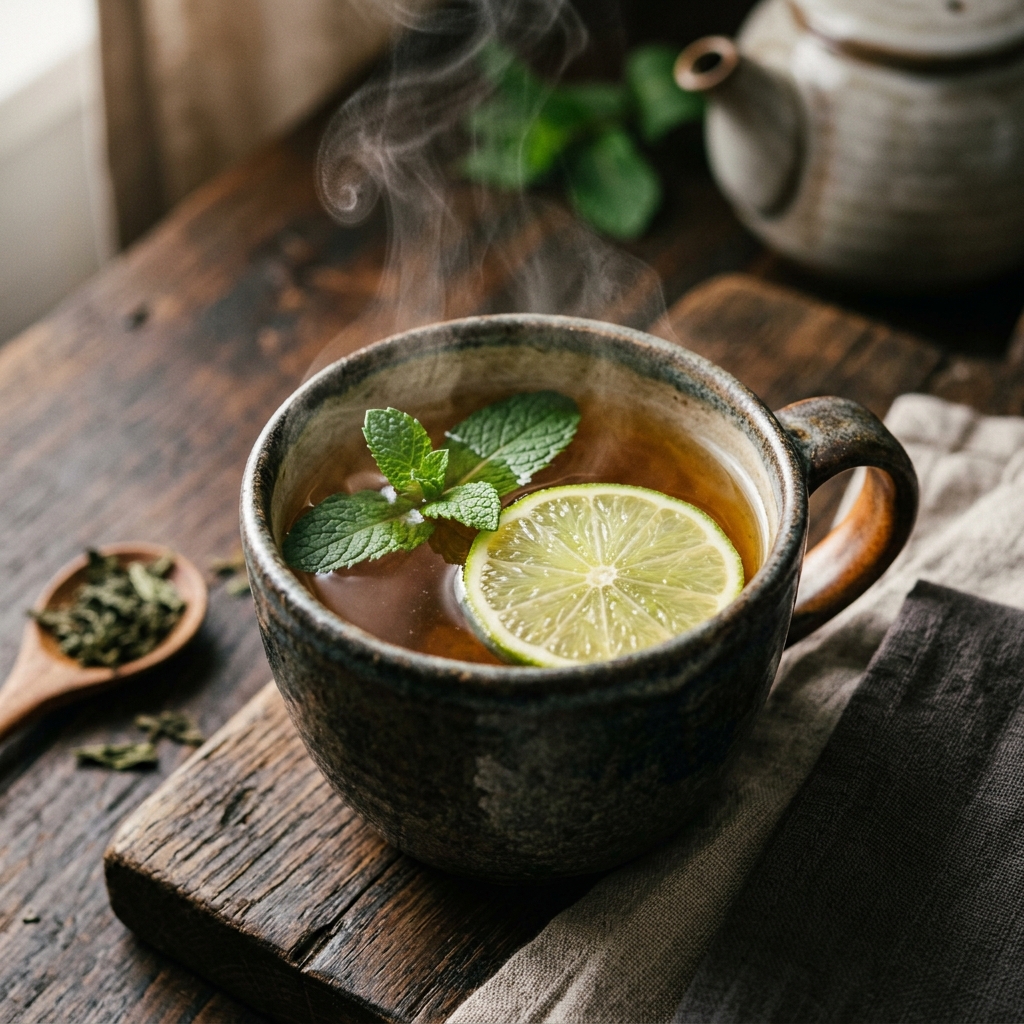
Digestive Peppermint Infusion
A soothing, fragrant, and highly digestive herbal tea made from steeped fresh peppermint leaves and stabilized with a squeeze of fresh lime juice.
Research Focus
Extracts highly water-soluble flavonoids and traps volatile monoterpenes like menthol, encouraging muscle relaxation and gastric comfort.
Place the fresh peppermint leaves in a teapot and gently press them with a spoon to release active oils.
Pour hot water over the leaves, cover the teapot immediately to prevent volatile oils from evaporating.
Steep for 8-10 minutes, then strain into a mug.
Squeeze in the fresh lime juice and serve warm.
Research Ingredients
- 1/2 cup Fresh Peppermint Leaves (slightly bruised)
- 2 cups Filtered Hot Water (90°C)
- 1/2 tsp Fresh Lime Juice
Nourishing Focus
Extracts highly water-soluble flavonoids and traps volatile monoterpenes like menthol, encouraging muscle relaxation and gastric comfort.
How to Use Peppermint for Health
Daily Routine
To maximize the bioavailability of its active compounds, Peppermint should be consumed intentionally.
Form Preference
It is best consumed in its raw or minimally processed form to preserve its delicate enzymatic structure and heat-sensitive antioxidants.
Synergistic Pairings
Optimal Timing
- In the morning on an empty stomach to enhance absorption.
- As a pre-workout or midday snack to provide sustained cellular energy.
- During the largest meal of the day to leverage its synergistic effects with other nutrients.
Sourcing & Preparation
Research Grade Equipment


* As an Amazon Associate I earn from qualifying purchases. See our full disclosure.
Scientific Analysis & Research Insights
ABSTRACT
A randomized, double-blind, placebo-controlled clinical trial proving that daily peppermint oil supplementation significantly improves cardiometabolic outcomes, reduces systolic blood pressure, and improves vascular endothelial function in patients with pre- and stage 1 hypertension.
Significant reduction in systolic and diastolic blood pressure
Marked improvement in flow-mediated dilation (FMD) of the brachial artery
Reduction in markers of systemic lipid peroxidation and oxidative stress
Well tolerated with excellent compliance and safety parameters
RESEARCH SPECS
Demonstrates peppermint oil as a safe, effective, non-pharmacological dietary intervention for early-stage hypertension and cardiovascular risk reduction.
foodDetail.researchDisclaimer
Frequently Asked Questions about Peppermint
Why does peppermint feel cooling?
Peppermint contains menthol, which binds to and activates the TRPM8 cold-sensitive receptors on sensory nerves, sending a cooling signal to the brain without actually changing temperature.
Can peppermint help with acid reflux?
No, peppermint relaxes the lower esophageal sphincter (LES). If you suffer from gastroesophageal reflux disease (GERD), peppermint may actually cause or worsen heartburn. Enteric-coated capsules are recommended to bypass the stomach.
Is peppermint safe to consume daily?
Yes, moderate consumption of peppermint tea or culinary herb is extremely safe and beneficial for most individuals. Avoid very high doses of essential oil unless under medical supervision.