
Rhodiola Rosea
Rhodiola rosea
Clinical Overview
Rhodiola Rosea is widely recognized in nutritional science for its profound impact on human health. Historically utilized in traditional practices across the globe, it has recently gained significant attention from modern clinical researchers. A resilient wild herb that thrives in cold, mountainous regions of Europe and Asia. Rhodiola Rosea is a legendary adaptogen clinically proven to reduce salivary cortisol responses to acute stressors, mitigate burnout, and sustain cognitive capacity under chronic mental fatigue. The clinical significance of Rhodiola Rosea cannot be overstated. By providing the body with a dense concentration of bioavailable nutrients, it actively supports metabolic homeostasis, enhances immune resilience, and fosters long-term longevity. Ultimately, Rhodiola Rosea exemplifies the philosophy that food is medicine. By prioritizing such nutrient-dense whole foods, individuals can proactively engineer their health and build robust resilience against modern dietary pitfalls.
Nutrient Profile
Health Benefits
HPA-Axis Regulation & Fatigue
Standardized SHR-5 extract modulates cortisol spikes and alleviates burnout and stress-induced fatigue.
Cognitive Focus Under Stress
Upregulates baseline monoamine neurotransmitters (serotonin and dopamine), sustaining attention span and mental agility.
Systemic Stress Resistance
Increases heat shock proteins and cellular ATP production, boosting physical endurance under severe workloads.
Preparation Guide
Standardized SHR-5 extracts are preferred for precise clinical compound delivery.
Best For: Maximizing nutrient absorption and digestibility
Alternative Usage
Best For: Ashwagandha or Ginseng for alternative HPA-axis stress modulation.
Nourishing Recipes
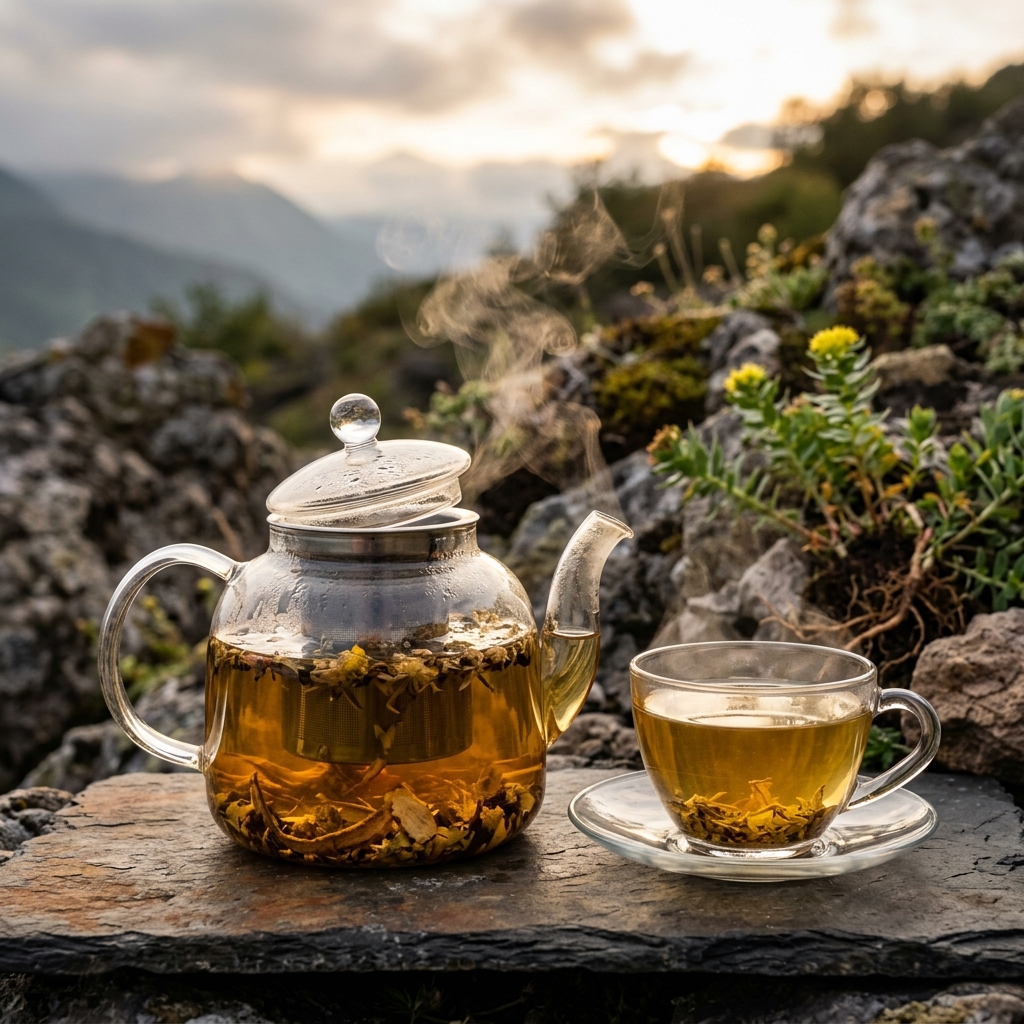
Adaptogenic Rosavin Infusion
A clean, comforting adaptogenic herbal tea prepared from slow-steeped Rhodiola rosea root to support cognitive energy.
Research Focus
Delivers standardized rosavins and salidroside directly to HPA-axis receptors to calm stress.
Place the dried Rhodiola rosea root slices in a heatproof glass teapot.
Pour hot filtered water over the root.
Add the mint sprig, cover, and steep for 10 minutes to allow the rosavins to dissolve completely.
Strain into a cup, stir in Manuka honey, and sip slowly.
Research Ingredients
- 1 tsp Dried Rhodiola Rosea Root (sliced/crushed)
- 1 cup Hot Filtered Water (185°F)
- 1 sprig Fresh Mint (cooling)
- 1/2 tsp Raw Manuka Honey
Nourishing Focus
Delivers standardized rosavins and salidroside directly to HPA-axis receptors to calm stress.
How to Use Rhodiola Rosea for Health
Daily Routine
To maximize the bioavailability of its active compounds, Rhodiola Rosea should be consumed intentionally.
Form Preference
It is best consumed in its raw or minimally processed form to preserve its delicate enzymatic structure and heat-sensitive antioxidants.
Synergistic Pairings
Optimal Timing
- In the morning on an empty stomach to enhance absorption.
- As a pre-workout or midday snack to provide sustained cellular energy.
- During the largest meal of the day to leverage its synergistic effects with other nutrients.
Sourcing & Preparation
Research Grade Equipment


* As an Amazon Associate I earn from qualifying purchases. See our full disclosure.
Scientific Analysis & Research Insights
ABSTRACT
A double-blind, randomized controlled trial proving that daily administration of standardized Rhodiola rosea extract SHR-5 over 28 days drastically lowers stress-induced fatigue levels, improves cognitive performance, and regulates salivary cortisol levels.
Significant reduction in stress-related fatigue and cognitive burnout symptoms
Marked stabilization of salivary cortisol responses following stress challenges
Drastic improvement in mental performance, focus, and concentration span
Excellent safety and tolerability with no serious adverse side effects
RESEARCH SPECS
Establishes Rhodiola rosea as a premier, clinically validated adaptogen for stress fatigue management.
foodDetail.researchDisclaimer
Frequently Asked Questions about Rhodiola Rosea
What is an adaptogen?
An adaptogen is a non-toxic natural substance (typically a plant or fungus) that helps the body adapt to physical, chemical, or environmental stress by exerting a normalizing influence on HPA-axis (hypothalamic-pituitary-adrenal) activity.
How does Rhodiola rosea help with fatigue?
Rhodiola rosea works by regulating cortisol spikes, supporting healthy neurotransmitter balance (dopamine, serotonin), and boosting cellular ATP production. This helps reduce physical exhaustion and mental burnout.
When is the best time to consume Rhodiola rosea?
The best time to take Rhodiola rosea is in the morning on an empty stomach. Taking it later in the afternoon or evening may interfere with sleep due to its activating, focus-boosting effects.
Who should avoid Rhodiola rosea?
Rhodiola rosea is exceptionally safe. However, individuals with bipolar disorder should avoid it because it can induce manic states. Pregnant or nursing women should consult their doctor before starting high-dose extracts.