
Wheatgrass
Triticum aestivum
Clinical Overview
Among the most potent foods in its category, Wheatgrass stands out for its unique molecular composition and impressive clinical efficacy. It has been cultivated for centuries and revered for its remarkable ability to support systemic wellness. The young grass of the common wheat plant, harvested before the grain forms. Wheatgrass is a nutrient powerhouse packed with chlorophyll, active enzymes, and essential amino acids. It is clinically validated for improving mucosal healing in ulcerative colitis, reducing oxidative stress, and supporting metabolic markers. When integrated into a daily dietary regimen, this remarkable whole food acts as a natural modulator of physiological processes. Its unique blend of fibers, vitamins, and rare secondary metabolites work synergistically to optimize cellular function and defend against oxidative stress. Beyond its primary benefits, Wheatgrass serves as a catalyst for holistic wellbeing. Its integration into modern diets bridges the gap between ancient dietary wisdom and contemporary clinical science, offering a pure, whole-food approach to longevity.
Nutrient Profile
Health Benefits
Ulcerative Colitis & Gut Healing
Clinical trials prove that wheatgrass juice significantly reduces active distal ulcerative colitis severity, bleeding, and mucosal inflammation.
Glycemic & Metabolic Support
Significantly decreases atherogenic lipoproteins and manages insulin response, stabilizing fasting blood glucose.
Systemic Detoxification
Extremely rich in chlorophyll, which aids in heavy metal chelation and enhances oxygenation of tissues.
Preparation Guide
Fresh pressed juice on an empty stomach is the preferred method for maximal enzymatic activity.
Best For: Maximizing nutrient absorption and digestibility
Alternative Usage
Best For: Spirulina or Barley grass for similar high-chlorophyll profiles.
Nourishing Recipes
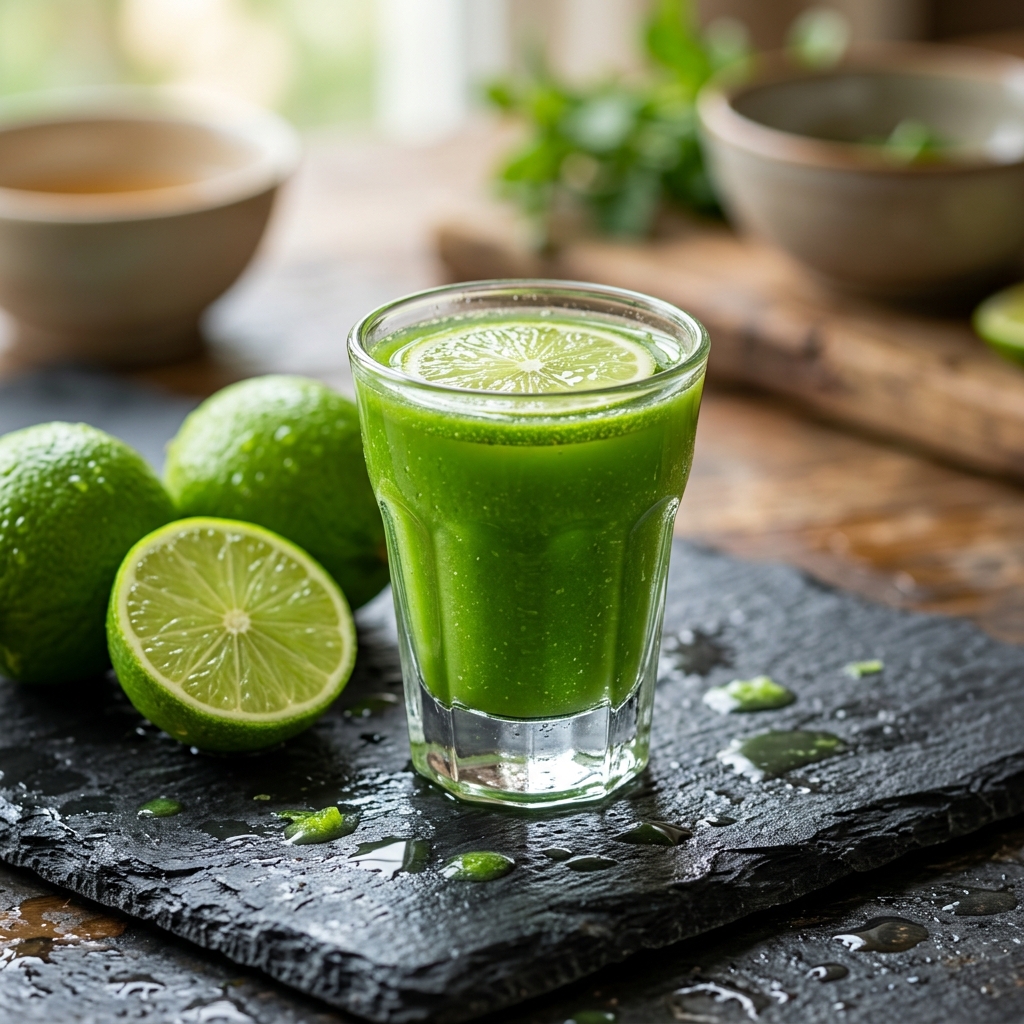
Mucosal-Shield Wheatgrass Tonic
A fresh, enzymatic green tonic featuring raw wheatgrass juice, celery, and lime to promote systemic tissue healing and gut mucosal regeneration.
Research Focus
Supplies concentrated active chlorophyll and enzymes directly to the gut mucosa for rapid cell repair.
Press the fresh wheatgrass and celery using a slow masticating juicer.
In a small glass, combine the 2 oz of wheatgrass juice with the celery juice and fresh lime juice.
Dilute with cold filtered water if the flavor is too intense.
Drink immediately on an empty stomach to ensure rapid enzymatic absorption.
Research Ingredients
- 2 oz Freshly Pressed Wheatgrass Juice
- 1/2 cup Celery Juice (cold-pressed)
- 1 tbsp Fresh Lime Juice
- 1/4 cup Cold Filtered Water
Nourishing Focus
Supplies concentrated active chlorophyll and enzymes directly to the gut mucosa for rapid cell repair.
How to Use Wheatgrass for Health
Daily Routine
To maximize the bioavailability of its active compounds, Wheatgrass should be consumed intentionally.
Form Preference
It is best consumed in its raw or minimally processed form to preserve its delicate enzymatic structure and heat-sensitive antioxidants.
Synergistic Pairings
Optimal Timing
- In the morning on an empty stomach to enhance absorption.
- As a pre-workout or midday snack to provide sustained cellular energy.
- During the largest meal of the day to leverage its synergistic effects with other nutrients.
Sourcing & Preparation
Research Grade Equipment


* As an Amazon Associate I earn from qualifying purchases. See our full disclosure.
Scientific Analysis & Research Insights
ABSTRACT
A randomized, double-blind, placebo-controlled trial proving that daily ingestion of wheatgrass juice for one month results in a significant reduction in overall disease activity index and rectal bleeding in patients with active distal ulcerative colitis.
Significant reduction in disease activity index (DAI) score
Drastic decrease in rectal bleeding and abdominal pain
No severe adverse events or clinical toxicity reported
Enhanced mucosal healing verified via sigmoidoscopy
RESEARCH SPECS
Establishes Wheatgrass juice as a highly effective, clinically validated dietary therapy for inflammatory bowel diseases.
foodDetail.researchDisclaimer
Frequently Asked Questions about Wheatgrass
Is wheatgrass gluten-free?
Yes, wheatgrass is 100% gluten-free. Gluten is only found in the seeds (grains) of the wheat plant. Since wheatgrass is harvested from the young grass blades before the seeds develop, it is completely safe for celiacs.
Can I drink wheatgrass every day?
Yes, consuming 1 to 2 oz of fresh wheatgrass juice daily is highly beneficial for systemic detoxification and gastrointestinal healing.
What is the healthiest way to drink wheatgrass?
The healthiest way is fresh-pressed raw juice consumed within 15 minutes of extraction to prevent the rapid oxidation of active enzymes and nutrients.
Who should avoid wheatgrass?
Wheatgrass is safe for almost everyone, but pregnant women or immunodeficient individuals should avoid raw, unpasteurized wheatgrass juice due to potential soil-borne bacteria, choosing high-quality freeze-dried powder instead.