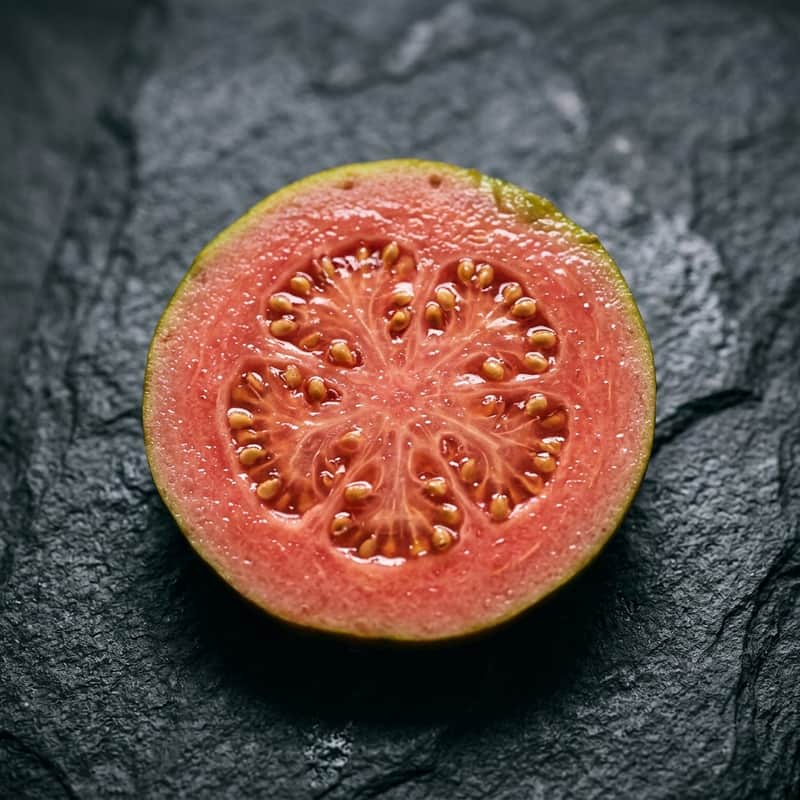
While citrus fruits often claim the spotlight for immune defense, Guava (Psidium guajava) quietly delivers an ascorbate concentration up to four times greater than that of an orange. This extraordinary density allows for a rapid 'ascorbate peak' in the bloodstream, providing immediate support for the production and activation of leukocytes during periods of environmental or viral challenge.
Guava represents a strategic nutritional asset, offering high-velocity Vitamin C delivery coupled with unique carotenoid synergy for systemic defense.
Beyond its Vitamin C profile, Guava is a significant source of lycopene—a carotenoid typically associated with tomatoes but found in high concentrations in pink-fleshed guava varieties. This combination of water-soluble antioxidants and fat-soluble carotenoids creates a dual-layered defense mechanism, protecting both the aqueous and lipid components of human cells from oxidative degradation.
To maximize bioavailability, clinical evidence suggests consuming the fruit raw and including the skin, which contains the highest concentration of polyphenols. When paired with a healthy fat source, such as extra virgin olive oil in a savory preparation, the absorption of lycopene is significantly enhanced, creating a potent nutritional protocol for long-term respiratory and cardiovascular health.
The Clinical Mechanics of Immune Support
When examining the implications of the ascorbate peak: mastering immune velocity with guava, modern nutritional science reveals a complex interplay between bioactive compounds and cellular metabolism. Historically, we have viewed food purely as caloric fuel. However, the paradigm is shifting toward understanding food as biological information. Every time you consume these nutrients, you are sending a stream of data to your cells, instructing them to upregulate protective pathways, modulate inflammation, and enhance mitochondrial efficiency.
One of the most fascinating aspects of this biological signaling is the concept of hormesis—a biological phenomenon where a beneficial effect results from exposure to low doses of an agent that is otherwise toxic or lethal when given at higher doses. Many phytochemicals act as mild cellular stressors, which in turn activate the body's endogenous antioxidant defense systems, such as the Nrf2 pathway. This is why a diverse intake of plant-based whole foods is so critical for longevity and systemic resilience.
Furthermore, the integrity of the gut microbiome plays an indispensable role. The microbiome acts as a secondary organ, processing complex polyphenols and fibers into highly bioavailable metabolites. These metabolites, such as short-chain fatty acids (SCFAs) like butyrate, enter the bloodstream and exert profound systemic effects, including crossing the blood-brain barrier to influence neuroinflammation and cognitive function. This bidirectional communication—often referred to as the gut-brain axis—underscores the importance of a nutrient-dense diet.
Advanced Applications and Synergistic Pairings
To maximize the bioavailability and efficacy of these nutrients, strategic food pairing is essential. For instance, lipid-soluble compounds require the presence of dietary fats for optimal absorption. Pairing fat-soluble vitamins or carotenoids with sources of healthy fats—such as extra virgin olive oil, avocados, or nuts—can increase their absorption by several folds. Similarly, the activation of certain beneficial enzymes, like myrosinase in cruciferous vegetables, can be enhanced by specific preparation methods.
Incorporating these clinical insights into a daily routine does not require a complete overhaul of one's lifestyle. Instead, it involves making intentional, evidence-based choices. By prioritizing foods with high nutrient density and specific bioactive profiles, individuals can proactively support their cellular health. The compounding effects of these dietary choices over years and decades are what ultimately shape our healthspan and resilience against chronic, age-related conditions.
As we continue to explore the frontiers of nutritional genomics and metabolomics, our understanding of these mechanisms will only deepen. The transition from a generalized dietary approach to personalized, precision nutrition is on the horizon. Until then, the foundational principles remain clear: a diverse, whole-food diet rich in specific, clinically validated compounds is our most powerful tool for maintaining vitality and preventing disease.
In conclusion, the therapeutic potential of these dietary interventions extends far beyond simple macronutrient balancing. By viewing our diet through the lens of cellular signaling and microbiome optimization, we empower ourselves to take control of our health trajectory. The evidence is clear: the right foods are not just sustenance; they are medicine.
Medical Disclaimer
The content provided on MyWholeFoods is for educational and informational purposes only and does not constitute medical advice. While our articles are peer-reviewed and cited from clinical literature, this information should not be used to diagnose, treat, or prevent any disease. Always consult with a qualified healthcare professional before making significant changes to your diet or wellness routine.