The Endothelium: The Inner Guardian of Heart Health
The endothelium is a single layer of cells lining your entire vascular system. Far from being a simple barrier, it is one of the body's largest endocrine organs, responsible for regulating blood pressure, immune response, and the smooth flow of blood. As we age or face chronic stress, the endothelium can become 'stiff,' leading to reduced blood flow and increased cardiovascular risk.
In 2026, clinical research has solidified the role of Cocoa Flavanols—specifically (-)-epicatechin—as one of the most potent natural modulators of endothelial health. By stimulating the enzyme *endothelial nitric oxide synthase* (eNOS), cacao triggers the production of Nitric Oxide (NO), the gas molecule that signals blood vessels to relax and dilate.
1. Nitric Oxide Synthesis: The Mechanism of Flow
When you consume high-purity cacao, the flavanols interact with the endothelial lining to increase the bioavailability of Nitric Oxide. This is not merely a transient effect; consistent intake has been shown to 'train' the blood vessels, improving their baseline elasticity.
A meta-analysis of the landmark COSMOS study data indicates that a daily dose of 500mg to 1000mg of cocoa flavanols can lead to a significant reduction in cardiovascular mortality, primarily through the sustained improvement of Flow-Mediated Dilation (FMD).
Cacao flavanols don't just provide antioxidants; they provide the chemical instructions your arteries need to stay flexible.
2. Cerebral Vitality: Feeding the Brain
The benefits of improved blood flow extend beyond the heart. The brain is the body's most oxygen-demanding organ, and its cognitive performance is directly tied to cerebral blood flow (CBF). Clinical trials utilizing fMRI imaging have shown that within 2 hours of consuming high-flavanol cacao, there is a measurable increase in blood flow to the hippocampus—the brain's memory center.
This 'neuro-vascular coupling' is why cacao is increasingly categorized as a true nootropic. By ensuring a high-fidelity supply of oxygen and glucose to neurons, cacao supports mental clarity, executive function, and long-term neuroprotection.
3. The 'Dark' Requirement: Why 85% is the Threshold
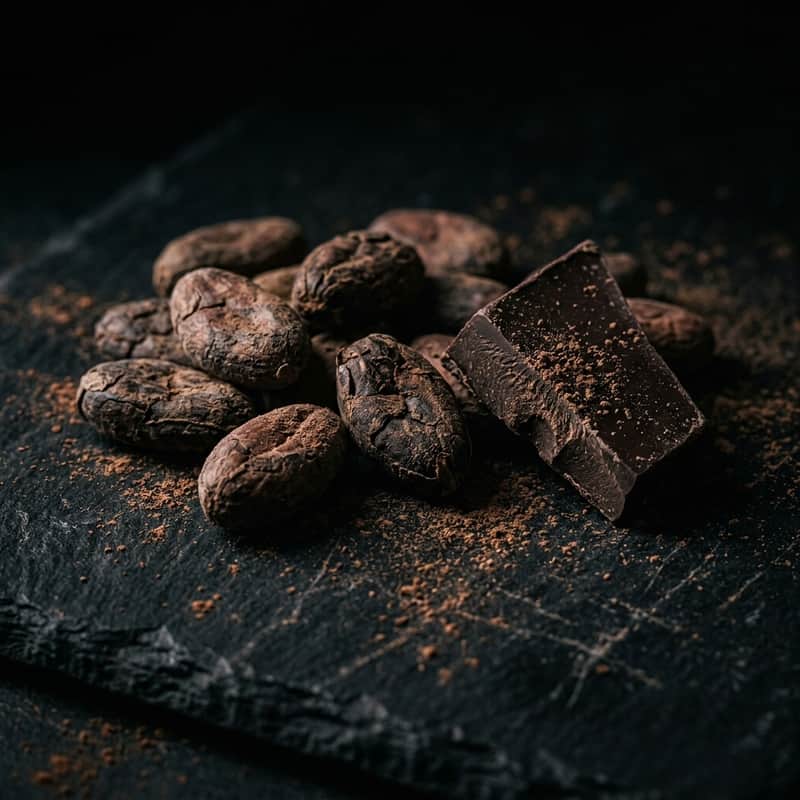
Not all cacao is created equal. The clinical benefits are strictly dependent on flavanol concentration, which is often destroyed during the heavy processing (alkalization or 'Dutching') of standard chocolate. To achieve the 'Nitric Oxide Protocol,' MyWholeFoods recommends a minimum of 85% cacao solids.
At this concentration, the sugar content is minimized, and the bitter alkaloids—which are markers of the beneficial polyphenols—are preserved. High-purity dark cacao acts as a precision tool for cardiovascular 'bio-harmonization,' without the inflammatory load of processed sweets.
The Circulation Synergy Ritual
To maximize the vascular benefits of cacao, pair it with a source of Vitamin C (like blueberries or citrus) to further stabilize Nitric Oxide in the bloodstream. MyWholeFoods suggests a daily afternoon ritual: 20-30g of 85%+ dark cacao paired with a handful of walnuts for a synergistic boost to both endothelial and neural health.
Medical Disclaimer
The content provided on MyWholeFoods is for educational and informational purposes only and does not constitute medical advice. While our articles are peer-reviewed and cited from clinical literature, this information should not be used to diagnose, treat, or prevent any disease. Always consult with a qualified healthcare professional before making significant changes to your diet or wellness routine.

Gregory David Founder & Editor, MyWholeFoods
Gregory David is the founder and editor of MyWholeFoods. He researches evidence-based nutrition and whole foods by reviewing peer-reviewed scientific literature, including studies published through PubMed and other respected scientific sources. His goal is to present reliable nutrition information in a clear, practical, and accessible way for everyday readers.