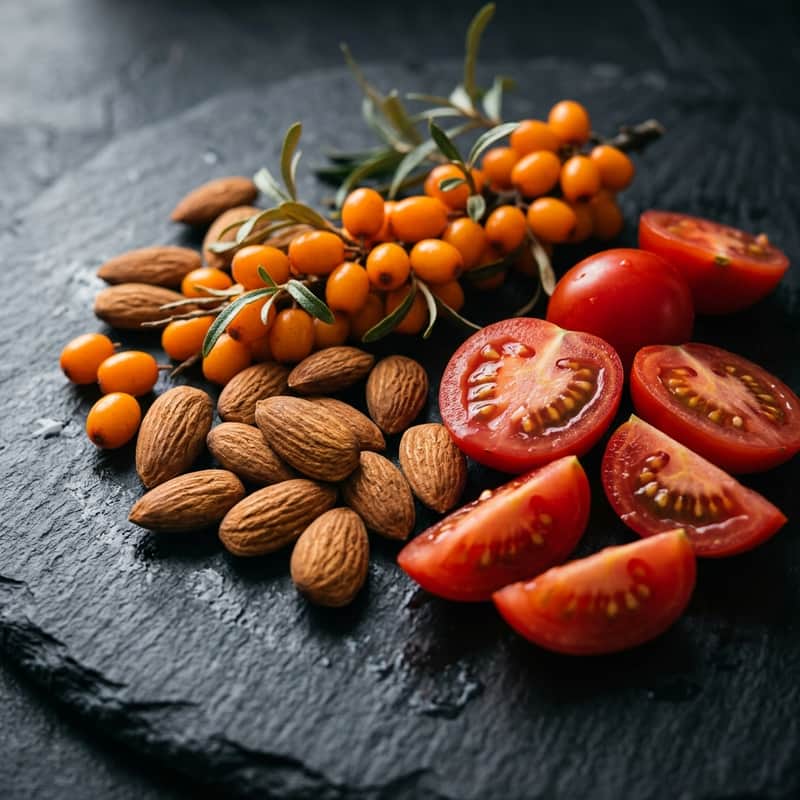
The New Era of Skincare is Internal
For decades, the pursuit of youthful skin was dominated by topical creams and external treatments. However, in 2026, clinical dermatology is increasingly focused on 'internal skincare.' The skin is our body's largest organ, and its structural integrity—from collagen synthesis to UV resilience—is directly determined by the micronutrients circulating in our bloodstream.
By strategically consuming specific whole foods rich in essential fatty acids, vitamin C, and unique polyphenols, we can actually build a biological shield against photo-aging, reduce wrinkle depth, and enhance our skin's natural glow from the inside out.
1. Almonds: The Ultimate Wrinkle Reducer
Almonds have emerged as a powerhouse for skin health. A landmark randomized controlled trial (PMID: 33673587) demonstrated that postmenopausal women who consumed almonds daily experienced a statistically significant reduction in both wrinkle severity and facial pigmentation. Over 16 to 24 weeks, the almond intervention group saw their wrinkle severity decrease by up to 16%.
This remarkable effect is driven by almonds' high concentration of alpha-tocopherol (Vitamin E) and essential fatty acids. These compounds act as potent antioxidants that protect the lipid barrier of the skin, locking in moisture while neutralizing the oxidative stress that breaks down collagen and elastin fibers.
Almonds provide the raw materials your skin needs to maintain its structural flexibility and defend against environmental damage.
2. Camu Camu: The Vitamin C Collagen Catalyst
Collagen is the protein scaffold that keeps our skin firm and youthful, but the body cannot synthesize collagen without Vitamin C. Camu Camu, a berry native to the Amazon rainforest, is one of the most concentrated botanical sources of Vitamin C on the planet. By flooding the system with bioavailable Vitamin C, Camu Camu provides the exact enzymatic co-factors required for fibroblasts (the cells that make collagen) to spin new, resilient skin fibers.
3. Red Tomatoes: The Lycopene UV Shield
Photo-aging—the damage caused by ultraviolet radiation from the sun—is the primary driver of premature wrinkles and age spots. Red tomatoes contain massive amounts of lycopene, a red pigment that acts as a powerful internal sunscreen. When consumed (especially lightly cooked with olive oil to increase absorption), lycopene accumulates in the skin, where it intercepts and neutralizes UV-induced free radicals before they can damage your DNA.
4. Sea Buckthorn: The Omega-7 Glow
Sea Buckthorn berries are uniquely prized in skincare for their high concentration of Omega-7 fatty acids (palmitoleic acid), a rare fat that is a natural component of skin lipids. Consuming Sea Buckthorn helps replenish the skin's moisture barrier from within, promoting a hydrated, 'plump' appearance while reducing the chronic micro-inflammation that can lead to redness and uneven tone.
The Radiant Skin Ritual
To implement these findings, MyWholeFoods recommends an 'Internal Glow' daily ritual: Incorporate a handful of raw almonds (about 20% of your daily calorie intake) into your afternoon snack routine to maintain a steady supply of Vitamin E. Enhance your morning smoothies with a teaspoon of Camu Camu powder for collagen synthesis, and ensure your weekly dinners include cooked Red Tomatoes to build up your skin's natural UV resilience.
Medical Disclaimer
The content provided on MyWholeFoods is for educational and informational purposes only and does not constitute medical advice. While our articles are peer-reviewed and cited from clinical literature, this information should not be used to diagnose, treat, or prevent any disease. Always consult with a qualified healthcare professional before making significant changes to your diet or wellness routine.

Gregory David Founder & Editor, MyWholeFoods
Gregory David is the founder and editor of MyWholeFoods. He researches evidence-based nutrition and whole foods by reviewing peer-reviewed scientific literature, including studies published through PubMed and other respected scientific sources. His goal is to present reliable nutrition information in a clear, practical, and accessible way for everyday readers.