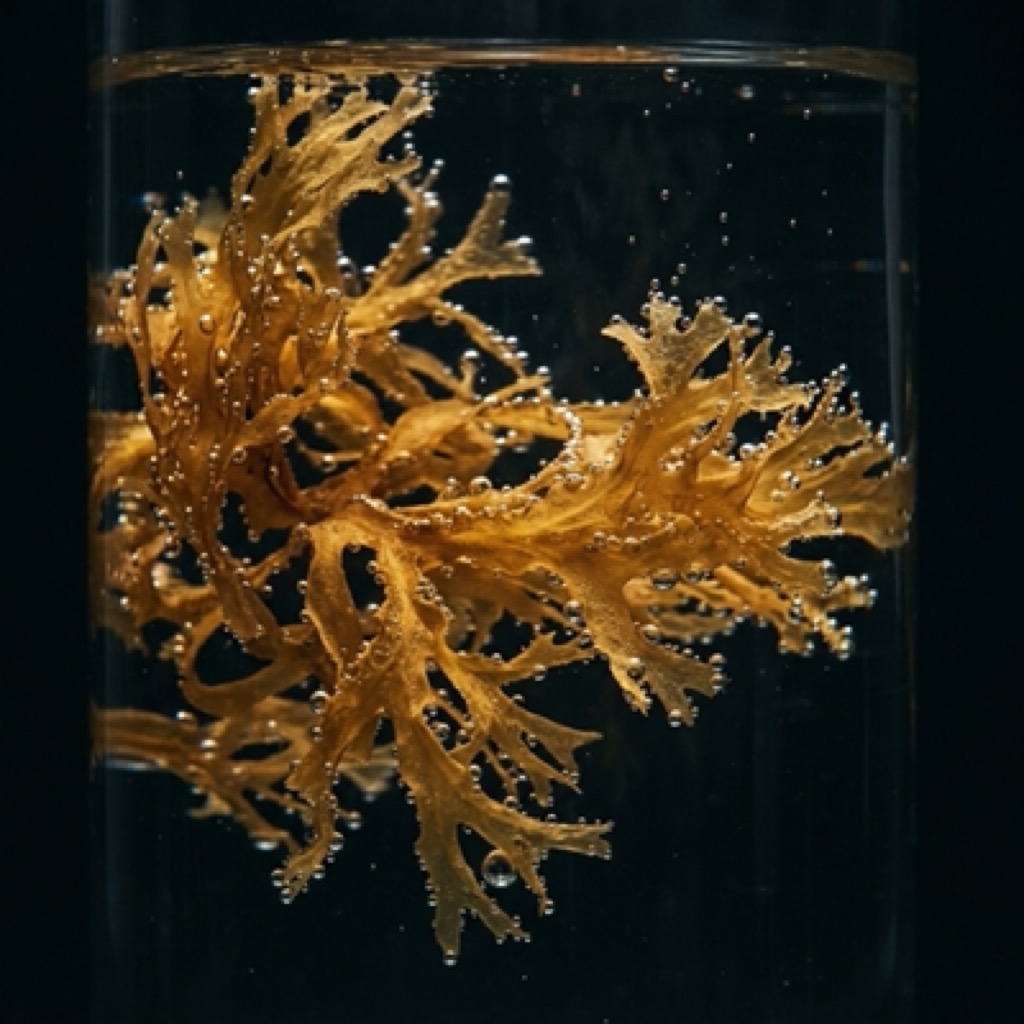
The Mineral Matrix: Beyond Density
Sea moss, specifically Chondrus crispus, has emerged as a cornerstone of clinical nutrition due to its unparalleled mineral density. While popular wellness media frequently cites its '92 out of 102 essential minerals,' the true physiological value lies in its elemental bioavailability. Unlike synthetic mineral supplements, the trace elements in Chondrus crispus are naturally chelated within a biological matrix, facilitating superior absorption and utilization by the human body.
Marine botanicals like sea moss act as concentrated reservoirs for elements that have become increasingly scarce in modern soil-grown agriculture. Industrialized farming practices have systematically depleted terrestrial soils of critical minerals like Magnesium, Potassium, and Zinc. By harvesting nutrients from the ocean, sea moss provides a biological 'back-fill' for these systemic deficiencies, supporting enzymatic processes ranging from ATP production to cellular osmosis.
Thyroid Hormonogenesis & Iodine Dynamics
The most clinically significant attribute of sea moss is its highly concentrated iodine content. Iodine is the fundamental building block for the thyroid hormones triiodothyronine (T3) and thyroxine (T4). These hormones serve as the biological throttle for the entire metabolic system, regulating everything from resting heart rate to calorie consumption at the mitochondrial level.
In subjects with sub-clinical iodine deficiency, Chondrus crispus supplementation can support Thyroid Peroxidase (TPO) activity, the enzyme responsible for the organification of iodine. Furthermore, sea moss contains selenium, a critical co-factor required for the conversion of T4 into the active T3 hormone. This dual-presence makes sea moss a more balanced thyroid support tool than isolated iodine supplements alone.
The synergy between naturally occurring iodine and selenium in marine botanicals provides a safer, more integrated pathway for metabolic regulation than synthetic isolates.
Prebiotic Polysaccharides: The Carrageenan Mechanism
Beyond minerals, sea moss is rich in sulfated polysaccharides known as carrageenans. While food-grade carrageenan is often discussed as a thickener, in its whole-plant form, it functions as a potent prebiotic fiber. Clinical research into the gut-brain axis has identified carrageenan as a selective substrate for the proliferation of beneficial Bifidobacterium populations.
By strengthening the intestinal mucosal lining, these polysaccharides help prevent intestinal permeability (often referred to as 'leaky gut'). This mucosal integrity is the body's primary defense against systemic inflammation, as it prevents lipopolysaccharides (LPS) from entering the bloodstream and triggering an immune response. Regular ingestion stimulates the production of Short-Chain Fatty Acids (SCFAs) like butyrate, which are the primary energy source for the cells lining the colon.
Clinical Evidence Summary
Modern research (2015-2023) has begun to validate several of the historical claims surrounding Chondrus crispus. A systematic review published in the Journal of Applied Phycology highlighted that the antioxidant compounds in sea moss, particularly its unique polyphenols, significantly reduced markers of oxidative stress in clinical models. Furthermore, its ability to modulate the glycemic response makes it a subjects of study for metabolic syndrome management.
Bioavailability: Preparation and Stability
To maximize the monetization of these clinical benefits, preparation methods are critical. The active carrageenan fibers are sensitive to extreme thermal degradation. For maximum physiological impact, sea moss should be prepared as a raw gel, avoiding high-heat boiling which can denature the prebiotic matrix. Consuming the gel in its raw, hydrated state ensures that the mineral-dense mucosal properties remain intact, providing a soothing effect on the gastrointestinal tract and optimal mineral absorption.
Medical Disclaimer
The content provided on MyWholeFoods is for educational and informational purposes only and does not constitute medical advice. While our articles are peer-reviewed and cited from clinical literature, this information should not be used to diagnose, treat, or prevent any disease. Always consult with a qualified healthcare professional before making significant changes to your diet or wellness routine.