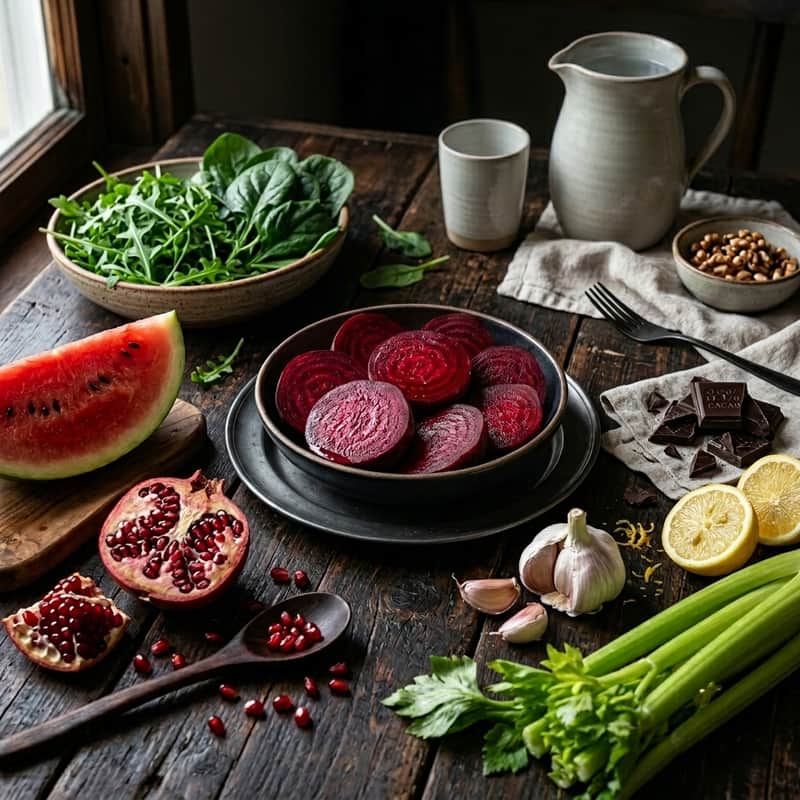
The Biological Engine of Flow
Nitric oxide (NO) is a critical gaseous signaling molecule that dictates the flexibility and health of your entire vascular system. Produced primarily by the endothelial cells lining your arteries, NO triggers vasodilation—the widening of blood vessels—which optimizes blood flow, lowers pressure, and ensures high-fidelity nutrient delivery to every organ. As we age, our natural production of NO can decline, making the strategic inclusion of specific whole food precursors essential for cardiovascular resilience.
1. Beetroot: The Nitrate Powerhouse
Beetroot is perhaps the most famous precursor for nitric oxide. It is exceptionally high in inorganic nitrates, which the body converts into NO via the nitrate-nitrite-NO pathway. Clinical research (PMID: 32292042) highlights its ability to significantly enhance athletic endurance and improve flow-mediated dilation (FMD) in both healthy and hypertensive individuals.
2. Watermelon: The Citrulline Catalyst
Unlike leafy greens that provide nitrates, watermelon offers a rich source of L-citrulline. This amino acid is a precursor to L-arginine, the primary substrate used by the enzyme endothelial nitric oxide synthase (eNOS) to create NO. Studies (PMID: 27378312) show that regular watermelon juice consumption improves NO bioavailability and reduces arterial stiffness.
3. Garlic: Activating the Endothelial Engine
Garlic does more than just lower blood pressure; it actively stimulates the production of nitric oxide. Compounds in garlic, specifically allicin and its metabolites, help activate the eNOS enzyme. A 2024 review (PMID: 39275211) confirms that garlic's antihypertensive effects are largely mediated through the sustained release of nitric oxide and hydrogen sulfide (H2S).
4. Pomegranate: Protecting the Signal
Pomegranate is unique because it doesn't just help produce nitric oxide; it protects it. The potent polyphenols in pomegranate juice act as high-fidelity antioxidants that prevent NO from being destroyed by oxidative stress. Research (PMID: 29998575) suggests this protective effect is critical for maintaining vascular elasticity in high-stress environments.
5. Dark Chocolate (Cacao): Flavanol-Driven Dilation
High-purity cacao (85%+) is a dense source of flavanols, particularly epicatechin. These flavanols directly signal the endothelium to increase NO synthesis. Clinical trials (PMID: 22156352) have demonstrated that dark chocolate consumption can lead to rapid improvements in blood flow and a measurable reduction in systolic blood pressure.
6. Spinach: The Original Nitrate Leaf
Spinach is a cornerstone of the vascular diet. Its high nitrate density provides a consistent supply of precursors for the salivary bacteria that initiate the NO conversion process. Systematic reviews (PMID: 22019438) confirm that even a single serving of nitrate-rich spinach can acutely improve arterial compliance.
7. Arugula: The Peppery Precursor
Arugula often surpasses spinach in nitrate concentration per gram. Its sharp, peppery bite is a marker of its bioactive density. Maintaining the storage stability of these nitrates is key; fresh arugula provides a potent boost to the nitrate-nitrite-NO pathway, supporting systemic circulation (PMID: 29660828).
8. Kale: Synergistic Vascular Support
While kale is famous for its Vitamin K content, its role in nitric oxide synthesis is driven by its unique combination of nitrates and anti-inflammatory flavonoids. Clinical models (PMID: 22744944) examine the nitrate and antioxidant profile of kale, confirming its status as a potent dietary precursor for nitric oxide production.
9. Citrus Fruits: Hesperidin Synergy
Citrus fruits like lemons, oranges, and grapefruits contain hesperidin, a bioflavonoid that enhances endothelial function. Hesperidin works by increasing the activity of eNOS, leading to a higher rate of NO production. Randomized trials (PMID: 21346065) have shown that citrus-derived polyphenols significantly improve vascular responsiveness.
10. Celery: The Mechanical Relaxant
Celery contains 3-n-butylphthalide (3nB), which works synergistically with nitric oxide to relax the smooth muscles of the arterial walls. By combining nitrates with these specific phthalides, celery provides a dual-action pathway for lowering peripheral resistance and optimizing total body blood flow (PMID: 40765738).
The Nitric Oxide Protocol
To maximize your nitric oxide levels, MyWholeFoods recommends a 'pre-loading' strategy: Consume a nitrate-rich green (like Arugula or Spinach) with a Vitamin C source (like Lemon) to stabilize the NO molecule. Incorporate Beets or Watermelon juice before physical exertion to prime your vascular engine, and maintain long-term endothelial health with daily servings of Garlic and high-purity Cacao.
Medical Disclaimer
The content provided on MyWholeFoods is for educational and informational purposes only and does not constitute medical advice. While our articles are peer-reviewed and cited from clinical literature, this information should not be used to diagnose, treat, or prevent any disease. Always consult with a qualified healthcare professional before making significant changes to your diet or wellness routine.

Gregory David Founder & Editor, MyWholeFoods
Gregory David is the founder and editor of MyWholeFoods. He researches evidence-based nutrition and whole foods by reviewing peer-reviewed scientific literature, including studies published through PubMed and other respected scientific sources. His goal is to present reliable nutrition information in a clear, practical, and accessible way for everyday readers.