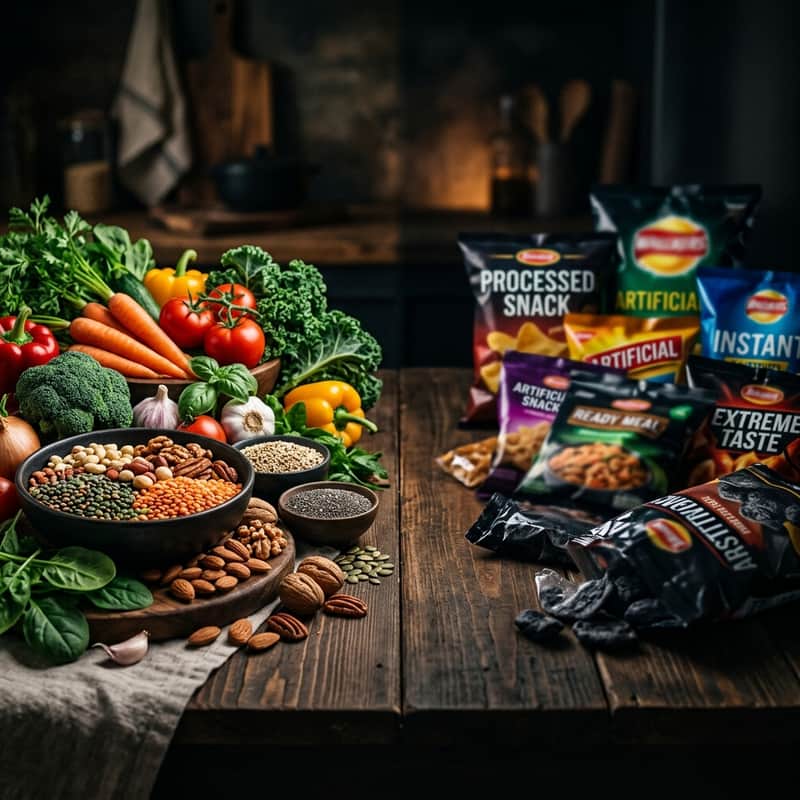
The Unmasking of Ultra-Processed Foods (UPFs)
For decades, the nutritional establishment focused almost exclusively on macro-nutrient counting—obsessing over grams of fat, carbohydrates, and protein, while largely ignoring the physical structure and source of the food itself. However, as we move through 2026, a massive paradigm shift has completely reshaped our understanding of human health. The focus has decisively shifted away from mere calories toward the profound, systemic dangers of Ultra-Processed Foods (UPFs). These are not simply foods that have been modified; they are industrially engineered formulations composed of fractionated, chemically altered ingredients designed primarily for infinite shelf-life and hyper-palatability, rather than human nourishment.
The scientific consensus has reached a critical mass. Landmark longitudinal studies published recently in major medical journals like The Lancet have demonstrated an undeniable correlation between high UPF consumption and an array of devastating chronic diseases. These encompass massive increases in the risk of obesity, type 2 diabetes, cardiovascular disease, and most alarmingly, severe cognitive decline. One recent 2026 study explicitly found that individuals consuming diets high in UPFs had a 47% higher risk of experiencing a heart attack or stroke compared to those eating whole-food diets, alongside measurable brain shrinkage and accelerated dementia risk. The danger lies not just in the high sugar or salt content, but in the industrial additives—emulsifiers, artificial colorings, artificial sweeteners, and preservatives—that completely disrupt the gut microbiome and trigger chronic, low-grade systemic inflammation.
The food industry has long utilized 'acelluar carbohydrates'—starches and sugars that have been stripped of their cellular walls. These highly refined carbohydrates digest almost instantly upon entering the stomach, causing violent spikes in blood glucose and corresponding crashes in insulin. This continuous metabolic rollercoaster not only drives insatiable cravings but fundamentally breaks the body's energy-sensing mechanisms, leading to widespread insulin resistance. To reclaim our health in 2026, we must recognize that UPFs are not just 'junk food'; they are a fundamentally different class of highly engineered substances that are incompatible with optimal human biology.
The Power of the 'Food Matrix'

The antidote to the UPF epidemic lies in a concept known as the 'Food Matrix.' When you consume a whole food—such as a lentil, an almond, or a wild blueberry—you are not just consuming isolated vitamins or isolated macronutrients. You are ingesting an incredibly complex, naturally occurring physical matrix of thousands of synergistic compounds working in biological concert. The food matrix dictates exactly how the food is digested, absorbed, and utilized by the human body. This physical structure is precisely what is obliterated during industrial food processing.
Consider the humble almond. When you eat a whole, raw almond, the cellular walls of the nut encapsulate the fats. Because human digestive enzymes cannot fully break down these rigid cell walls, a significant portion of the fat (and calories) passes through the digestive tract unabsorbed, while simultaneously feeding beneficial gut bacteria in the lower intestine. However, if you take that exact same almond, grind it into a highly processed, ultra-fine flour, and bake it, the food matrix is destroyed. The fats and carbohydrates are immediately and completely absorbed, causing a significantly different and far more severe hormonal and metabolic response, despite the 'macronutrients' technically being identical.
This is why the reductionist approach to nutrition—looking only at the back of a nutrition label—is fundamentally flawed. The physical structure of a whole apple, with its skin, pectin, and fibrous flesh, provides a slow, steady release of energy and a massive dose of polyphenol antioxidants that actively suppress inflammation. Conversely, apple juice—which has had its matrix entirely removed—acts practically identically to pure liquid sugar in the bloodstream. In 2026, the leading dietary advice is incredibly simple but profoundly impactful: prioritize the integrity of the food matrix. Eat foods in a form that is as close to their natural, biological state as possible.
The 2026 'Fiber Frenzy': Rebuilding the Gut
As the dangers of UPFs have become undeniable, one specific nutrient has skyrocketed to the forefront of global health consciousness: dietary fiber. Often referred to in 2026 as the 'Fiber Frenzy,' consumers are finally recognizing that fiber is not merely a bulking agent for digestion, but arguably the single most important nutrient for longevity, metabolic stability, and immune resilience. The vast majority of people consuming standard Western diets are severely deficient in dietary fiber, primarily because UPFs are almost entirely devoid of it.
Fiber is the exclusive fuel source for the trillions of symbiotic bacteria residing in our colon. When we consume complex, prebiotic fibers found in foods like chickpeas, lentils, artichokes, and dark leafy greens, our gut microbes ferment them into short-chain fatty acids (SCFAs), particularly butyrate. Butyrate is a biological miracle molecule. It provides the primary energy source for the cells lining the colon, maintains the integrity of the gut barrier (preventing 'leaky gut'), actively suppresses systemic inflammation, and even communicates with the brain via the vagus nerve to regulate satiety and mood.
By 'fiber-maxxing'—intentionally building meals around diverse, high-fiber whole foods—you are actively reversing the damage caused by industrial food environments. High fiber intake dramatically slows the absorption of glucose into the bloodstream, preventing the insulin spikes that drive metabolic syndrome. It physically binds to excess cholesterol and toxins in the digestive tract, ensuring they are excreted rather than reabsorbed. As we push further into 2026, replacing processed grains and synthetic snacks with robust, fiber-rich whole foods like legumes, root vegetables, and intact whole grains is the most scientifically validated strategy for radically extending human healthspan.
Protecting Cognitive Health from Industrial Diets

Perhaps the most terrifying consequence of high UPF consumption is its insidious, compounding effect on the human brain. Recent clinical data has drawn a straight line between diets high in hyper-processed foods and an accelerated risk of cognitive decline, depression, and neurodegenerative conditions like Alzheimer's disease. The mechanism is deeply rooted in systemic inflammation. The artificial emulsifiers and highly refined seed oils ubiquitous in UPFs degrade the intestinal lining, allowing inflammatory cytokines to flood the bloodstream and eventually cross the blood-brain barrier, triggering neuro-inflammation.
To actively defend and rebuild cognitive health, we must aggressively replace these inflammatory industrial products with brain-protective whole foods. Foods rich in Omega-3 fatty acids, such as walnuts and chia seeds, provide the exact structural building blocks the brain needs to maintain neuroplasticity and cellular membrane fluidity. Furthermore, the intense, dark pigments found in wild blueberries and blackberries are packed with anthocyanins—potent polyphenols that have been clinically shown to cross the blood-brain barrier, directly neutralize free radicals, and improve memory and learning capacity in older adults.
By consciously rejecting the convenience of ultra-processed snacks and instead preparing meals using neurologically active whole foods, you are not just feeding your body; you are actively shielding your brain from the slow, degrading effects of modern industrial diets. The contrast is stark: UPFs slowly starve the brain of critical micronutrients while bathing it in inflammation, whereas a diverse, whole-food matrix delivers a continuous, slow-release supply of the exact molecular compounds required for lifelong cognitive resilience, emotional stability, and sharp mental focus.
Medical Disclaimer
The content provided on MyWholeFoods is for educational and informational purposes only and does not constitute medical advice. While our articles are peer-reviewed and cited from clinical literature, this information should not be used to diagnose, treat, or prevent any disease. Always consult with a qualified healthcare professional before making significant changes to your diet or wellness routine.