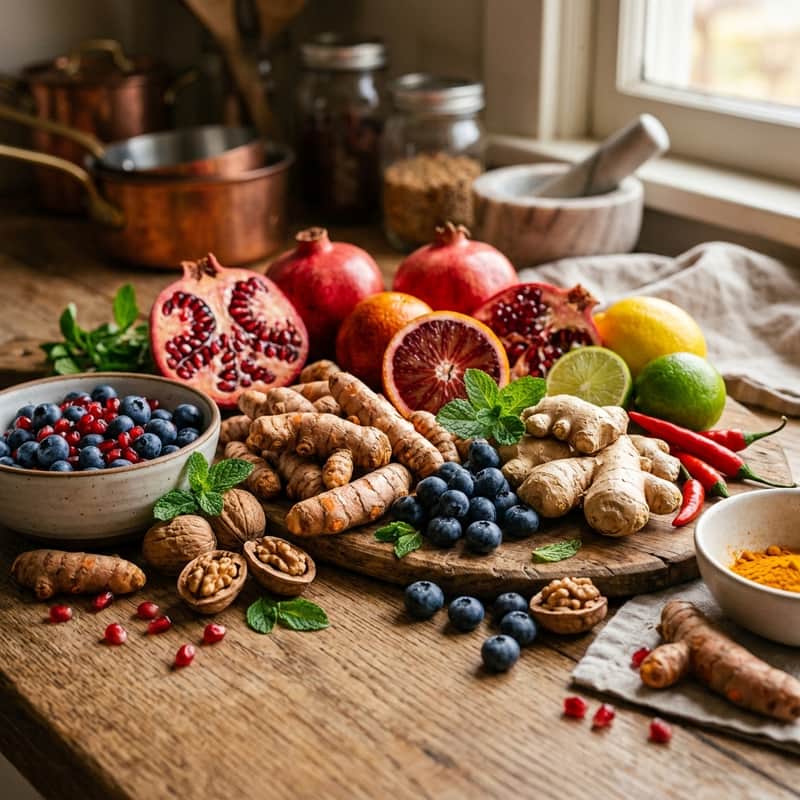
The Endothelium: The Gatekeeper of Circulation
Blood flow is more than just a mechanical process; it is a complex biological dialogue between your heart, your brain, and the microscopic lining of your blood vessels known as the endothelium. When this lining is healthy, it produces nitric oxide and other signaling molecules that keep vessels flexible and 'open.' Precision nutrition offers a powerful, natural pathway to optimize this system, ensuring that oxygen and nutrients are delivered with high fidelity to every cell in your body.
1. Turmeric (Curcumin): Elasticity through Enzyme Modulation
Turmeric's primary bioactive, curcumin, is a potent modulator of vascular health. Clinical research (PMID: 28070018) demonstrates that curcumin supplementation significantly improves flow-mediated dilation (FMD)—a key marker of endothelial function. It works by increasing the bioavailability of nitric oxide while simultaneously reducing the oxidative stress that can 'stiffen' arterial walls.
2. Walnuts: The Alpha-Linolenic Advantage
Walnuts are unique among nuts for their high concentration of alpha-linolenic acid (ALA), a plant-based Omega-3. Randomized trials (PMID: 15037535) have shown that incorporating walnuts into a daily diet directly improves endothelial function, particularly in individuals with high cholesterol. The synergy of ALA and specific polyphenols in walnuts helps maintain the membrane integrity of blood vessels.
3. Blueberries: Anthocyanin-Driven Dilation
The deep blue pigments in blueberries, known as anthocyanins, are more than just antioxidants; they are vascular signaling tools. Research (PMID: 26024297) confirms that blueberry consumption acutely improves endothelial function. These compounds help activate the enzymes responsible for vessel relaxation, making blueberries a cornerstone of any 'flow-centric' diet.
4. Cayenne Pepper: Activating the TRPV1 Pathway
Cayenne pepper contains capsaicin, which does more than just add heat. It interacts with the TRPV1 receptor in the body, triggering a cascade that improves endothelium-dependent vasorelaxation. Clinical models (PMID: 20625120) highlight how dietary capsaicin can prevent hypertension by promoting long-term vascular flexibility and reducing systemic resistance.
5. Pomegranate: Protecting the Flow Signal
Pomegranate juice is rich in unique polyphenols that act as high-fidelity protectors of nitric oxide. Clinical evaluations (PMID: 23519910) show that regular pomegranate consumption reduces blood pressure and improves vascular responsiveness. By shielding nitric oxide from oxidative destruction, pomegranate ensures that the 'signal to dilate' remains strong and clear.
6. Citrus Fruits: Hesperidin and Endothelial Tone
Citrus fruits like oranges and lemons contain hesperidin, a bioflavonoid that specifically targets the endothelium. Studies (PMID: 21346065) demonstrate that hesperidin stimulates the production of nitric oxide while reducing inflammatory markers in the blood. This dual action makes citrus a vital tool for maintaining smooth, unobstructed circulation.
7. Ginger: Systemic Circulatory Support
Ginger has long been used to 'warm' the body, and modern science confirms its circulatory benefits. A randomized clinical trial (PMID: 26758574) included ginger as a key intervention for improving markers of endothelial function and lowering blood pressure. Ginger's pungent gingerols help reduce systemic inflammation, allowing for more efficient blood transport throughout the body.
The Circulation Protocol
To implement these findings, MyWholeFoods recommends a structured daily approach: Start your morning with a ginger and lemon tonic to prime your vascular system. Incorporate walnuts and blueberries into your midday meals for sustained endothelial support, and use turmeric and cayenne in your evening preparations to maintain overnight circulatory health. This 'rhythmic nutrition' ensures that your vessels remain elastic and responsive 24/7.
Medical Disclaimer
The content provided on MyWholeFoods is for educational and informational purposes only and does not constitute medical advice. While our articles are peer-reviewed and cited from clinical literature, this information should not be used to diagnose, treat, or prevent any disease. Always consult with a qualified healthcare professional before making significant changes to your diet or wellness routine.

Gregory David Founder & Editor, MyWholeFoods
Gregory David is the founder and editor of MyWholeFoods. He researches evidence-based nutrition and whole foods by reviewing peer-reviewed scientific literature, including studies published through PubMed and other respected scientific sources. His goal is to present reliable nutrition information in a clear, practical, and accessible way for everyday readers.