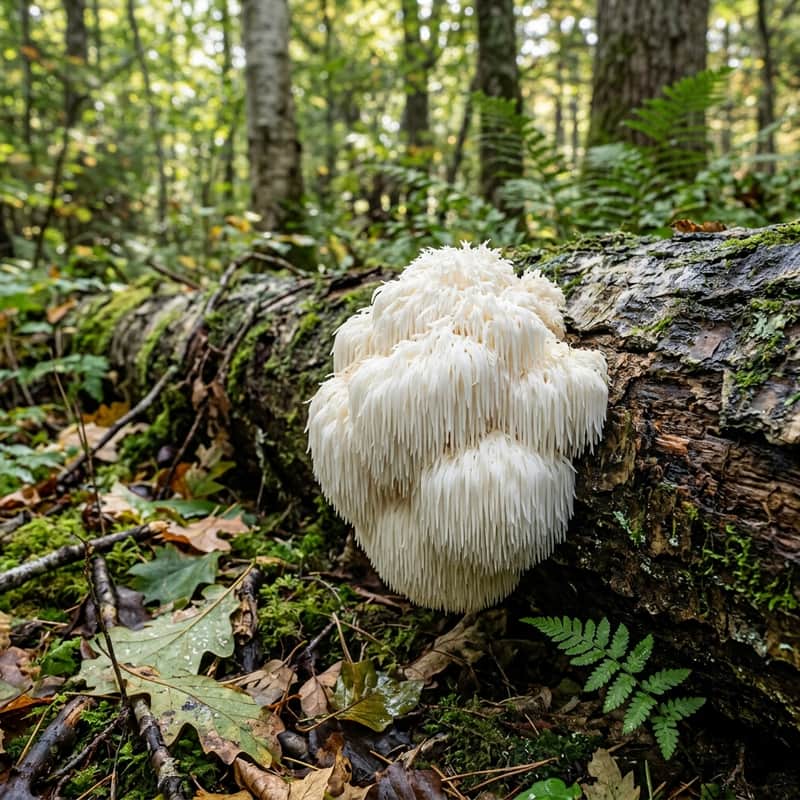
Introduction: The Natural Nootropic
Lion's Mane mushroom (Hericium erinaceus) has surged in popularity over the last decade, transitioning from a staple of traditional Eastern medicine to a celebrated cognitive enhancer in modern wellness circles. Often referred to as a 'natural nootropic,' this unique culinary and medicinal mushroom is revered for its remarkable ability to support brain health, enhance focus, and protect against neurodegeneration. Unlike synthetic cognitive enhancers that often rely on overstimulating the central nervous system with caffeine or amphetamine derivatives, Lion's Mane works harmoniously with the body's natural biological processes. It achieves this primarily through two specific classes of active compounds unique to its species: hericenones and erinacines.
Historically used by Buddhist monks to enhance focus during meditation and by traditional Chinese medicine practitioners to fortify the spleen and gut, Lion's Mane is now the subject of intense clinical scrutiny. With a striking appearance that resembles the cascading white mane of a lion, this beautiful fungus is proving that its biological effects are as impressive as its aesthetic.
The Anatomy of Lion's Mane: Hericenones and Erinacines
To understand why Lion's Mane is so effective for cognitive enhancement, we must examine its chemical composition. The mushroom is composed of two primary parts: the fruiting body (the visible mushroom you see above ground) and the mycelium (the root-like network that grows beneath the surface). Each part contains different bioactive compounds crucial for brain health.
The fruiting body is rich in hericenones, while the mycelium contains highly concentrated levels of erinacines. Both of these diterpenoid compounds are notable for their exceptionally low molecular weight, which allows them to easily cross the blood-brain barrier. This is a critical factor; many supplements claim to benefit the brain but contain molecules too large to ever reach brain tissue. Once across the barrier, hericenones and erinacines get straight to work, acting as powerful catalysts for neurological repair and growth.
The Mechanics of Neuroplasticity: NGF and BDNF
The human brain's ability to grow, adapt, and repair itself throughout a person's lifetime is known as neuroplasticity. For decades, scientists believed that neurogenesis (the creation of new neurons) ceased shortly after childhood. We now know this is false, and the process relies heavily on two crucial proteins: Nerve Growth Factor (NGF) and Brain-Derived Neurotrophic Factor (BDNF).
Clinical studies have demonstrated that the active compounds in Lion's Mane directly stimulate the synthesis of NGF in the brain. NGF is essential for the growth, maintenance, proliferation, and survival of certain target neurons. As we age, our natural production of NGF begins to decline, which contributes to the shrinkage of brain tissue and the onset of cognitive conditions such as Alzheimer's disease and dementia. By actively promoting NGF production, Lion's Mane effectively helps to maintain robust memory networks, facilitates the myelination of nerve fibers (which speeds up electrical signaling in the brain), and delays age-related cognitive decline.
Clinical Evidence: Memory, Focus, and Cognitive Decline
While robust, large-scale human clinical trials are still ongoing, the existing data from double-blind, placebo-controlled studies presents a compelling case for Lion's Mane as a therapeutic intervention. One of the most frequently cited studies involved older Japanese adults diagnosed with mild cognitive impairment (MCI). The participants who consumed 3 grams of Lion's Mane extract daily for 16 weeks showed significant and sustained improvements in their cognitive function scores compared to the placebo group. Interestingly, once the supplementation ceased, their cognitive scores began to decline back to baseline, suggesting that continuous use is necessary for long-term benefits.
Animal models have further corroborated these findings. In studies involving mice with amyloid-beta plaques (the primary pathological hallmark of Alzheimer's disease), Lion's Mane extract was shown to break down these plaques and significantly improve the mice's performance in spatial memory tasks, such as navigating a water maze. These neuroprotective effects highlight the mushroom's potential not just as a cognitive enhancer for healthy individuals, but as a preventative measure against degenerative neurological diseases.
The Mood Connection: Anxiety, Depression, and the Gut-Brain Axis
The benefits of Lion's Mane extend beyond mere cognitive horsepower; it also profoundly influences emotional regulation and mood. Chronic inflammation is increasingly recognized as a foundational cause of both depression and anxiety. Lion's Mane possesses potent anti-inflammatory properties that help reduce systemic inflammation, particularly neuroinflammation. In one study involving adult women, four weeks of Lion's Mane supplementation resulted in significantly lower reported levels of irritation, anxiety, and depression compared to the placebo group.
Furthermore, we must consider the microbiome-brain connection. The gut and the brain are inextricably linked via the vagus nerve, and a healthy gut microbiome is essential for producing neurotransmitters like serotonin and dopamine. Lion's Mane acts as a powerful prebiotic, nourishing beneficial gut bacteria. By fortifying the gut lining and promoting a diverse microbiome, Lion's Mane indirectly supports mood stability and psychological resilience, proving that true cognitive enhancement requires a holistic approach to the entire body.
Digestive Health and Immunity
Traditional Chinese Medicine has utilized Lion's Mane for centuries to treat gastric ulcers and digestive distress. Modern science has validated this traditional use, showing that the mushroom's extract can inhibit the growth of Helicobacter pylori, a bacterium that causes stomach ulcers. Furthermore, its rich concentration of beta-glucans serves to modulate the immune system. Beta-glucans activate macrophages and natural killer (NK) cells, enhancing the body's innate defense mechanisms against pathogens while simultaneously preventing the immune system from becoming hyperactive.
How to Incorporate Lion's Mane into Your Routine
If you are looking to harness the cognitive benefits of Lion's Mane, the quality and preparation of the supplement matter immensely. Because the beneficial erinacines are locked within the mycelium and the hericenones in the fruiting body, it is highly recommended to seek out 'dual-extracted' supplements. A dual extraction process utilizes both hot water (to extract the immune-boosting beta-glucans) and alcohol (to extract the neuro-regenerative diterpenoids). Look for products that explicitly state they contain both fruiting body and mycelium extracts.
Standard clinical dosages typically range from 1,000 mg to 3,000 mg of high-quality extract per day. For the best results, consistency is key; cognitive benefits are cumulative and are generally most noticeable after 4 to 8 weeks of continuous daily use. It can be easily incorporated into your morning routine by stirring the extract powder into coffee, tea, or a smoothie.
Potential Side Effects and Precautions
Lion's Mane is generally considered exceptionally safe and well-tolerated, with a very low risk of side effects. However, because it is a mushroom, individuals with known mushroom allergies should avoid it. Some people may experience mild gastrointestinal upset when first introducing it to their diet. Additionally, because of its immune-modulating properties, individuals with autoimmune diseases or those taking immunosuppressant medications should consult with a healthcare professional before beginning supplementation.
Conclusion: The Future of Mycological Medicine
As modern neuroscience continues to map the complexities of the human brain, natural compounds like Hericium erinaceus offer a profound bridge between ancient medicinal wisdom and cutting-edge clinical therapy. By actively stimulating nerve growth factor, reducing neuroinflammation, and supporting the gut-brain axis, Lion's Mane stands out as one of the most promising natural interventions for both cognitive enhancement and the prevention of neurodegenerative disease. Incorporating this remarkable fungus into a holistic wellness routine could be a pivotal step toward unlocking long-term neurological resilience and mental clarity.
Medical Disclaimer
The content provided on MyWholeFoods is for educational and informational purposes only and does not constitute medical advice. While our articles are peer-reviewed and cited from clinical literature, this information should not be used to diagnose, treat, or prevent any disease. Always consult with a qualified healthcare professional before making significant changes to your diet or wellness routine.

Gregory David Founder & Editor, MyWholeFoods
Gregory David is the founder and editor of MyWholeFoods. He researches evidence-based nutrition and whole foods by reviewing peer-reviewed scientific literature, including studies published through PubMed and other respected scientific sources. His goal is to present reliable nutrition information in a clear, practical, and accessible way for everyday readers.