Introduction: The Multibillion-Dollar Mirage
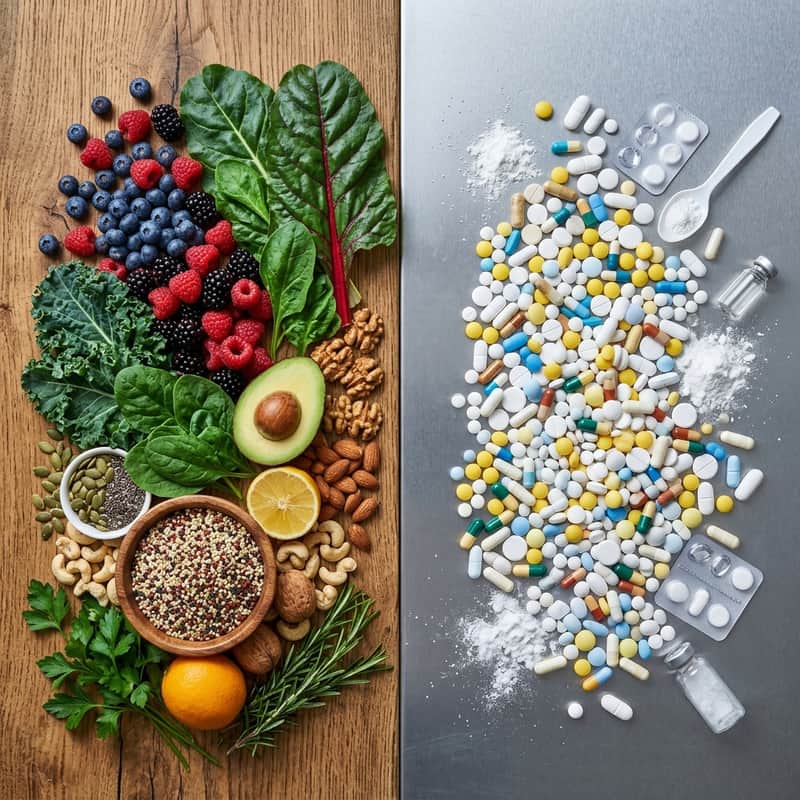
Walk down the aisle of any modern health food store, and you will be confronted by thousands of neatly packaged bottles, each promising a highly concentrated, isolated extraction of health. Vitamin C for immunity, Vitamin E for antioxidants, calcium for bones, and beta-carotene for vision. This reductionist view of nutrition—the idea that human health can be achieved by simply swallowing the isolated active compounds found in food—has fueled a multibillion-dollar industry. However, as nutritional biochemistry has advanced rapidly into 2026, the scientific consensus has fundamentally shifted. We now understand that nutrition is not a collection of isolated soloists; it is a profoundly complex, highly orchestrated symphony. When you extract a single nutrient from a plant, you leave behind the biological orchestra that was designed to support it. This article explores the definitive science of why isolated supplements can never truly replicate the deep, systemic healing properties of natural whole foods, and why the 'Food Matrix' is the most critical concept in modern nutritional science.
For decades, scientists attempted to isolate the 'active ingredients' of healthy diets. If populations eating high amounts of fruits and vegetables had lower rates of cancer and heart disease, the logical next step for the pharmaceutical and supplement industries was to extract the primary vitamins from those foods, pack them into a megadose pill, and sell the result. The assumption was that if a little bit of a vitamin in an apple is good, a massive dose of that isolated vitamin in a capsule must be better. This foundational assumption has been proven not only incorrect but, in several high-profile clinical trials, actively harmful. The human body evolved over millions of years to extract nutrients from complex biological structures, not from synthetic powders. Understanding the distinction between a whole food and an isolated supplement requires looking deep into the microscopic architecture of our food.
The Magic of the 'Food Matrix'
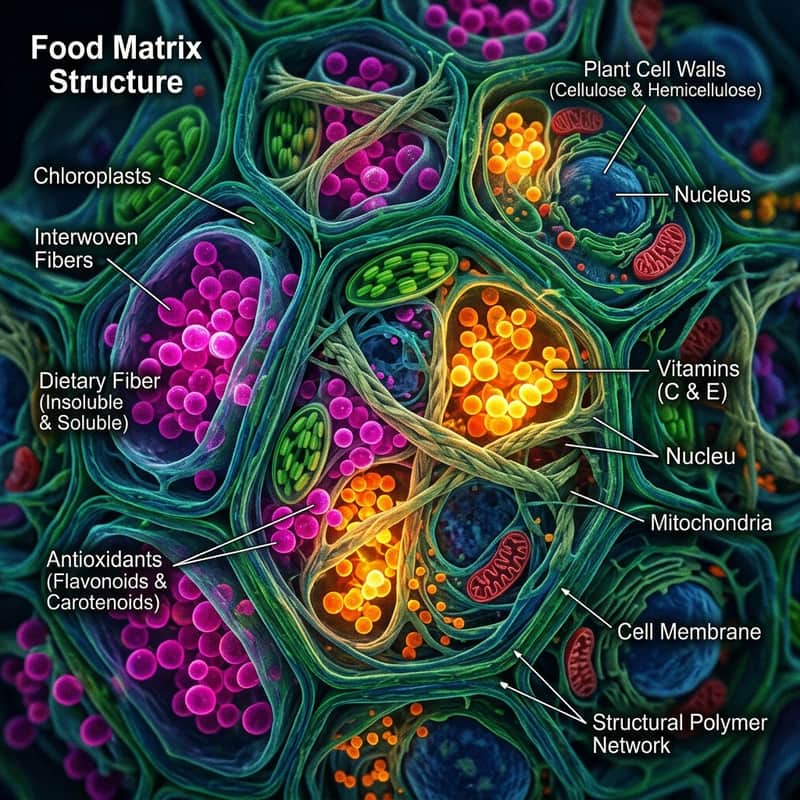
At the heart of the whole food advantage is a concept known as the 'Food Matrix.' When you consume a whole food, such as a wild blueberry or a walnut, you are not merely ingesting a collection of unbound vitamins and minerals floating in a vacuum. You are ingesting an incredibly intricate physical and chemical architecture. The food matrix consists of the structural components of the plant—the rigid cellulose and hemicellulose cell walls, the interwoven web of soluble and insoluble dietary fibers, the specialized organelles like chloroplasts and mitochondria, and a vast network of binding proteins and lipids.
This three-dimensional matrix dictates precisely how the food behaves inside the human digestive tract. It governs the rate at which gastric juices can penetrate the food particles, controlling the speed at which sugars are released into the bloodstream and preventing violently harmful insulin spikes. More importantly, the food matrix physically protects sensitive micronutrients and antioxidants from being destroyed by stomach acid, shuttling them safely into the lower intestine. Here, the intact fibrous matrix acts as a critical prebiotic fuel source, fermenting and feeding the trillions of symbiotic bacteria that comprise our gut microbiome. An isolated vitamin C pill provides zero structural matrix, zero fiber, and zero sustenance for the microbiome. It dissolves instantly, floods the bloodstream unnaturally, and is largely excreted within hours, offering only a fraction of the biological benefit of a matrix-bound nutrient.[1]The food matrix: implications in processing, nutrition and health
Critical Reviews in Food Science and Nutrition (2019)
View Study →
The Concept of Nutritional Synergy
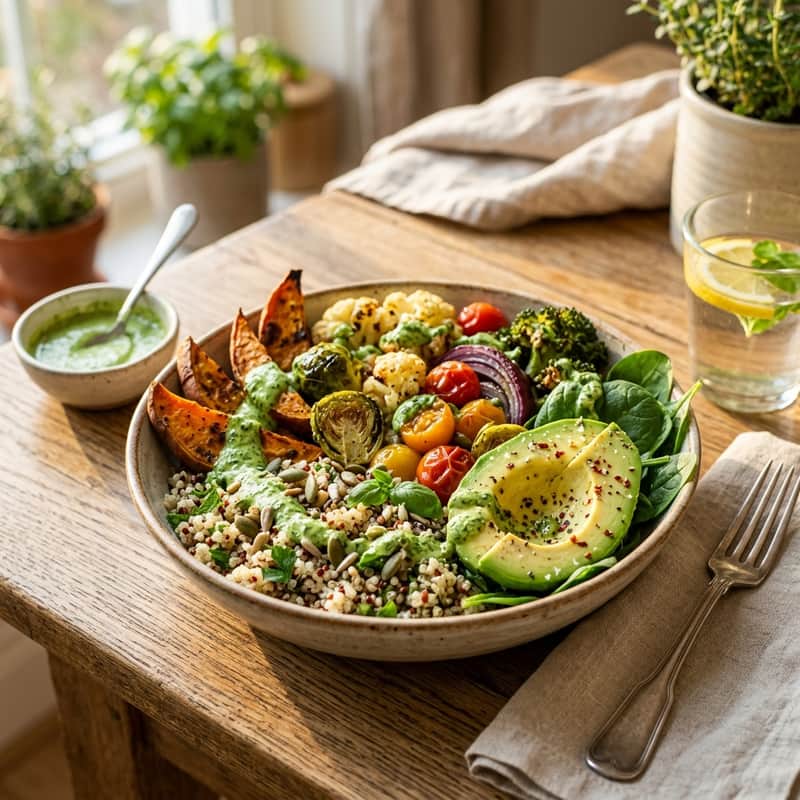
Beyond physical structure, whole foods provide unparalleled chemical synergy. In nature, nutrients do not exist in isolation; they exist in complex biochemical networks designed to enhance each other's absorption, stability, and cellular efficacy. Consider Vitamin C found in a whole orange. Inside the fruit, Vitamin C is tightly bound to a class of phytonutrients called bioflavonoids (such as hesperidin and naringenin). These flavonoids actively protect the Vitamin C from premature oxidation and significantly enhance its uptake into human cells. Furthermore, the orange provides natural water, structured carbohydrates, and trace minerals that the body utilizes to transport the vitamin across the intestinal wall.
When you take a synthetic Ascorbic Acid (Vitamin C) supplement, you are consuming the isolated antioxidant stripped of its bioflavonoid partners. Without its natural synergistic compounds, the isolated ascorbic acid is far less bioavailable and can sometimes even act as a pro-oxidant if taken in excessive megadoses. This synergy extends to nearly all nutrients. The fat-soluble vitamins (A, D, E, and K) found in dark leafy greens are perfectly packaged by nature alongside natural plant lipids and chloroplasts that trigger the release of bile acids in the human stomach, ensuring their absorption. A dry pill of Vitamin A taken on an empty stomach is largely wasted by the body because the synergistic trigger for absorption—dietary fat—is missing.
The Danger of Isolation: When Supplements Fail
The clinical consequences of ignoring nutritional synergy have been starkly illustrated in several landmark scientific trials. One of the most famous examples is the Alpha-Tocopherol, Beta-Carotene Cancer Prevention (ATBC) Study. Researchers noted that populations consuming high amounts of beta-carotene (found in carrots and sweet potatoes) had significantly lower rates of lung cancer. They hypothesized that giving heavy smokers megadoses of isolated beta-carotene supplements would protect them. The results shocked the scientific community: the smokers receiving the isolated beta-carotene supplements actually experienced an INCREASED rate of lung cancer and higher overall mortality.[2]The effect of vitamin E and beta carotene on the incidence of lung cancer (ATBC Study)
The New England Journal of Medicine (1994)
View Study → Why? Because inside a whole carrot, beta-carotene is balanced by hundreds of other carotenoids and antioxidants that safely manage free radicals. When highly concentrated and isolated in a pill, beta-carotene became unstable in the highly oxidative environment of a smoker's lung, flipping from a protective antioxidant into a damaging pro-oxidant.
A similar phenomenon has been observed with calcium supplementation. While dietary calcium from whole foods (like leafy greens, seeds, and dairy) is strongly associated with bone health and cardiovascular protection, massive studies have shown that high-dose isolated calcium supplements are associated with an increased risk of cardiovascular events, such as myocardial infarction. Without the synergistic presence of Vitamin K2, Vitamin D, and Magnesium—which dictate where calcium is deposited in the body—the sudden influx of isolated calcium from a supplement can end up calcifying the arteries instead of strengthening the bones. These cautionary tales underline a fundamental biological truth: human physiology is adapted to process complex, slow-release whole foods, not massive, isolated chemical boluses.
When Targeted Supplementation Actually Makes Sense
This deep scientific appreciation for whole foods does not mean that all supplements are useless or universally harmful. The key is understanding that supplements should be utilized exactly as their name implies—as a *supplement* to a robust diet, not as a replacement for one. There are distinct, scientifically validated scenarios where targeted supplementation is clinically necessary. For instance, Vitamin B12 is produced by bacteria in soil and the guts of animals, making it notoriously difficult for strict vegans and vegetarians to obtain adequately from modern, sanitized plant foods. In this case, an isolated B12 supplement is a non-negotiable necessity to prevent severe neurological damage. Similarly, individuals living in northern latitudes during the winter months cannot synthesize adequate Vitamin D from the sun, making Vitamin D3 supplementation highly prudent for immune and bone health.
Furthermore, in cases of severe, clinically diagnosed deficiencies—such as acute iron deficiency anemia—a high-dose, isolated supplement is required to rapidly correct the deficit, a feat that would be too slow to achieve through dietary changes alone. Supplements also play a vital role for individuals with specific genetic polymorphisms (like MTHFR mutations requiring methylated folate) or severe malabsorption issues due to gastrointestinal diseases. However, in all these cases, the supplement is being used as a targeted medical intervention to fix a specific metabolic block, rather than as a broad-spectrum substitute for a healthy diet.
Conclusion: Prioritizing the Produce Aisle Over the Pharmacy Aisle
As we navigate the complex landscape of health and wellness in 2026, the mandate from nutritional science is clear: we must stop trying to outsmart millions of years of evolutionary biology with synthetic pills. The true fountain of health is not found in the sterile aisles of a supplement store, but in the vibrant, chaotic, and beautifully complex produce aisle. Every time you consume a whole fruit, vegetable, nut, or seed, you are ingesting a masterclass in biochemical engineering—a perfect food matrix designed to nourish your cells, balance your hormones, and feed your microbiome in ways that no laboratory could ever replicate.
Moving forward, focus on maximizing dietary diversity. Eat the rainbow to ensure you are receiving the full spectrum of synergistic phytonutrients. Embrace the fiber-rich structures of whole plant foods, recognizing that the matrix itself is just as important as the vitamins it contains. Reserve isolated supplements for targeted, medically necessary interventions, and trust that the most powerful, safest, and most effective medicine on the planet is still grown in the ground, not synthesized in a lab.
Clinical Citations & References
- The food matrix: implications in processing, nutrition and health
Critical Reviews in Food Science and Nutrition (2019)
View Study → - The effect of vitamin E and beta carotene on the incidence of lung cancer (ATBC Study)
The New England Journal of Medicine (1994)
View Study →
Medical Disclaimer
The content provided on MyWholeFoods is for educational and informational purposes only and does not constitute medical advice. While our articles are peer-reviewed and cited from clinical literature, this information should not be used to diagnose, treat, or prevent any disease. Always consult with a qualified healthcare professional before making significant changes to your diet or wellness routine.